HOURS: TUESDAY - SATURDAY 12-9PM // CLOSED SUNDAYS & MONDAYS
A new witch hunt
A new witch hunt
Reality or jealousy?
Preamble
The accusation of witchcraft and its condemnation are very old. Written traces exist in Mesopotamia with the Code of Hammurabi, around 1750 BC, then in large numbers under the Greek and Roman empires, and subsequently in the Bible. This hunt, which reached its peak between 1450 and 1750 in Europe, and more particularly in New England from the 1640s, culminated in 1692 in Massachusetts with the "Salem Witch Trials". It resulted in about 40,000 to 60,000 victims and executions, based on accusations often devoid of tangible and irrefutable evidence of a capital crime and fueled by religious beliefs. The turning point, in the fifteenth century, came in particular from the idea, formulated by theologians at the end of the Middle Ages, of a pact with the Devil, popularized by the Malleus Maleficarum (1486). The spread of the printing press, developed in Europe by Johannes Gutenberg a few decades earlier, then allowed an exponential spread of these ideas.
A hunt for the most vulnerable
About 75 to 80% of the accused in Europe were women and, particularly in Salem, out of more than 200 people accused, two-thirds to threequarters were women. The reason given is often linked to religious and scholarly misogyny, because women, at the time, were considered weaker in the face of the Devil. They were mainly of fragile social status and without male protection, often caregivers, midwives or healers. But at the source, the accusations were first and foremost the result of local conflicts, neighborhood tensions between large families, but also of the Church's desire to control women deemed too independent.
The role of "spectral evidence"
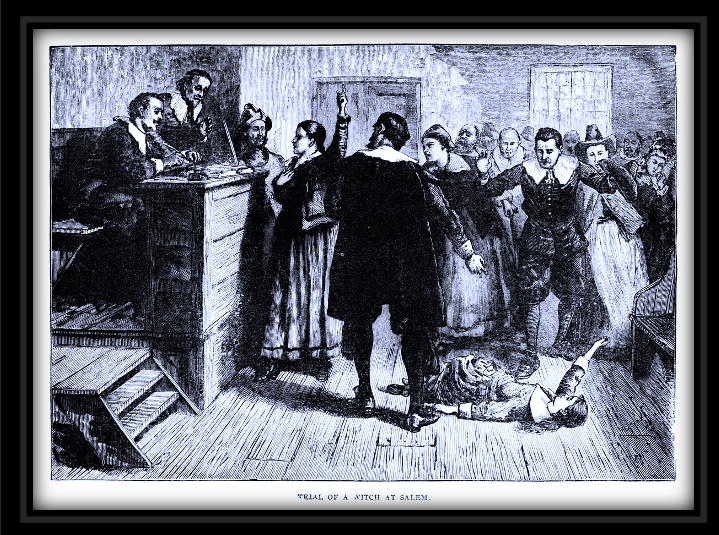
The court, the famous Court of Oyer and Terminer in Massachusetts, accepted as evidence the testimony of the accusers who claimed to see the spirit, the ghost of the accused, torment them. Almost impossible to refute, this type of testimony fueled the escalation. Confessions, often obtained under pressure or torture, sometimes allowed escape from the gallows, prompting others to be accused. But those who did not repent of their alleged sins were tried, and if convicted, such as John Proctor, Rebecca Nurse, George Burroughs, Ann Foster, Samuel Wardwell, and fourteen others, they were hanged. Giles Corey, meanwhile, was crushed under the weight of stones to death.
The real reasons for this hunt
The social and political context of the time was one of the real triggers of this movement. The wars against the Wabanaki and the French, which began in 1675, had traumatized the region and sent refugees to Salem. The colony, deprived of its charter since 1684, was very weakened and did not have a new governor until 1692. In Salem Village, in search of autonomy, farm families like the Putnams opposed families linked to the Salem Town trade, while the highly contested pastor Samuel Parris crystallized these rivalries. But above all, the legal procedure fed the spiral, as spectral evidence was impossible to refute, and confession could save from the gallows. It was therefore neither the Church alone nor the State alone that caused the phenomenon, but rather the fear that was shared by the elites as well as by the villagers, many of whose accusations came from below. It is therefore an accumulation of circumstances causing social instability that required those responsible.
The end of this infernal hunt
It was in 1692 that Governor William Phips dissolved the court, after influential clergymen such as Increase Mather disputed the value of the spectral evidence and the accusations affected notables, including the governor's wife. The last defendants were acquitted or pardoned in 1693, and in 1697 Massachusetts held a day of fasting and repentance. Legal pardons took place in 1711, and then others over the centuries, until the last person still concerned was officially exonerated in 2022, 329 years later.
A more than interesting interrelationship
So, the question arises:
Would it be possible to compare the contemporary stigmatization of the use of AI, with all the precautions that such an analogy requires, to certain pillory mechanisms that, in history, have led to the designation of a new category of "impure", exposed to public judgment on the basis of accusations sometimes made without solid, verifiable and indisputable evidence? If social platforms today allow everyone to validate, accuse and judge individually, have we not returned, in a new form, to the logic of personal denunciation of a suspected but unestablished act? Because if I remember correctly from my civics classes in middle school, the very principle of the jury in a trial is precisely to entrust a group representing civil society with the responsibility of examining the facts, confronting the evidence, hearing the arguments and reaching a common decision. In criminal matters, a judgment cannot be based on rumor, suspicion or simple personal conviction. It must be based on sufficiently probative evidence to establish the facts beyond a reasonable doubt, within the framework of the laws, procedures and guarantees provided for by law. However, social networks sometimes seem to reverse this principle. Suddenly, the accusation precedes the investigation, suspicion takes the place of evidence, and the public conviction comes even before the facts have really been established.
AI, the new witch hunt
In recent months, and more than three centuries later, a new form of hunting seems to have been taking over the world. This time, it is no longer a question of looking for a pact with the Devil, but a supposed pact with artificial intelligence in the world of writing. The phenomenon took on a spectacular dimension in 2026 when several authors awarded or selected for prestigious prizes were publicly accused of having had their texts written by a machine. The controversy reached a peak in the French-speaking world a few days ago, when Thélyson Orélien, a black Canadian author publishing his first novel, already winner of the Fnac Novel Prize and selected for the Goncourt with "C'était ça ou mourir", was accused on social networks of having produced a large part of his novel with the assistance of AI. The accusation was based in particular on analyses carried out with the Pangram detector, also an AI tool. A few days later, the Académie Goncourt withdrew his book from its selection, invoking both these analyses and accusations of plagiarism, even though other detectors had given contradictory results on his work. As if the war of words needed to be purified and rewrite Émile Zola's "J'accuse...!" to forget that our world is once again at war and that all the rules of law, ethics, morality and social life are being called into question by certain leaders of world powers as well as by civil society under an alleged right of "Wokism".

"J'accuse" in the world of wine
The much smaller world of wine was no exception. After Fikayo Ifaturoti was awarded the TexSom Award for Best Global Wine Communicator in Short-Form Writing for "The Stradivarius Violin × 1969 Bollinger VVF", this young black woman in her thirties, born in Nigeria and now living in London, was accused by several professionals who claimed to recognize in her text a writing generated by AI. Detection software was used to try to verify this, but their conclusions differed, but the organizers of the competition stressed, for their part, that there was no definitive proof to establish how the text had been written. What is certain is that Olufikayo "Fikayo" Ifaturoti has been publicly indicted and that her reputation as well as her work are now likely to be permanently questioned throughout her future career, regardless of its truth, if she is allowed to continue her career.
So, as in the past, the question remains troubling
Are we really looking for fraud, or are we sometimes trying to confirm a suspicion born of fear, competition or, perhaps, jealousy? For, as in the seventeenth century in Salem, accusations that are impossible to prove irrefutably sometimes seem to be based solely on the number of witnesses and accusers who come to speak at the stand of the accused. Thus, a wave of opinions, offended souls and public informers this time accuses the "AI Devil" of having taken hold of certain misguided souls. But then, who are these new indignant puritans who, through their comments, accentuate for the most part the doubt about the veracity of the work of these wine professionals?
The accusers
- Miquel Hudin, writer and wine critic based in Spain
- Henry Jeffreys, British journalist and author specializing in wine and spirits
- Alice Feiring, American author and critic specializing in natural wines
- Andy Neather, wine journalist and author
- Tom Wark, American journalist and commentator on the wine industry.
- Alder Yarrow, founder of Vinography, who has published a particularly strong review. Vinography
Other authors, including Joe Roberts, Peter Pharos and Brett Vankoski, have gone on to comment on the controversy or reflect on its implications for the profession, without necessarily making such a categorical accusation themselves.
The defenders
- Felicity Carter, wine journalist and founder of Drinks Insider; she confronts Hudin and Jeffreys' accusations with the defense of Richard Hemming MW, organizer of the Awards
- Richard Hemming MW, British author and wine communicator, creator and organizer of the 67 Pall Mall Global Wine Communicator Awards, launched in 2024 to reward different forms of communication around wine: articles, video, audio and short formats.
- Elaine Chukan Brown, author, speaker and international wine educator. She has served as US Executive Editor of JancisRobinson.com, columnist for Decanter and contributor to Wine & Spirits Magazine. She has also contributed to several editions of the Oxford Companion to Wine and the World Atlas of Wine
An important point
They did not all "accuse" Ifaturoti to the same degree. Hudin, Wark and Yarrow have taken particularly affirmative positions; Jeffreys speaks instead of a "strong signal" of at least AI-assisted writing; Carter has mainly investigated the accusations; Robert Joseph has treated the issue more broadly and with more reserve. Richard Hemming MW and Elaine Chukan Brown have disputed the strength of these conclusions. Brown has warned that the characteristics used to recognize AI come precisely from human writing and that an over-reliance on detectors risks "erasing" the very humans we are trying to protect.
The real reasons for this post-modernist hunt
The new hunt for AI users is not anecdotal, because it reveals a society destabilized by a technology that it already uses massively, but that it still does not know how to classify morally or really channel. This economic fear, these professional rivalries and this cultural crisis, coupled with an identity panic, are hidden behind much more explosive accusations of fraud, intellectual laziness or cheating. On the geopolitical level, AI has become a weapon of power, especially between the two great powers that are the United States and China, which are competing for models, semiconductors, infrastructure, standards and, ultimately, the ability to define the rules of tomorrow's digital world. On the economic level, the threat is even more concrete since it now directly affects the intellectual professions of writers, journalists, translators, illustrators, teachers, programmers and consultants. It is therefore understandable that this new fear of downgrading feeds a defensive reaction. In the literary and journalistic worlds, where recognition, publications, contracts and awards are rare, suspicions have become particularly exacerbated. When an author wins a prize and a pseudo-whistleblower, with the help of software, then claims that his text "looks" like AI, the question of fairness suddenly becomes legitimate. But there is a chasm, sometimes crossed with worrying ease, between suspicion and proof: too regular punctuation, too clean vocabulary, too constructed structure suddenly become clues against them. So, in the name of faith in machines, do "algorithmic detectors" take the place of the old spectral evidence? They impress with their percentages without always being able to materially demonstrate how a text was produced.
The Plea of the Accused
In reality, contemporary society is suffering from a much deeper crisis: that of authenticity. We live in a world where a photo can be fake, a voice can be cloned, a video can be fabricated, an article can be synthetic, and we no longer spontaneously know what to trust. So we look for visible culprits in this new intangible reality. But the AI user is often less the cause of the problem than the convenient symbol of an upheaval that is beyond us. The real fear may not be that the machine will write for us; it is that we will soon no longer be able to define what gives value to human work. And when a society no longer knows exactly what it wants to protect, it often starts by blaming those who cross the new borders before those boundaries have even been clearly drawn. It is at this precise moment that prudence ceases to be a virtue and that the witch hunt begins.
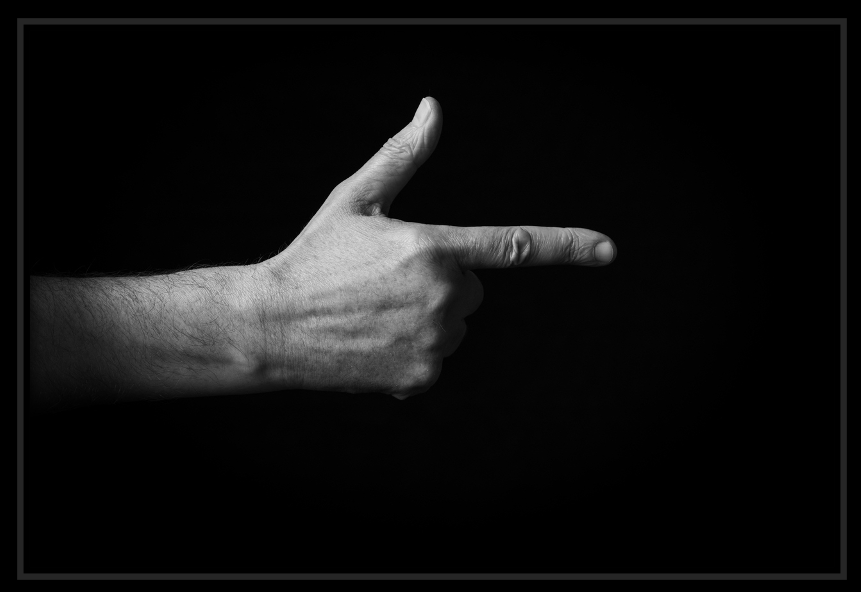
Mea culpa
I'm one of those people who prefers to confess before being charged, and I also believe that justification and reasoning are much more valuable than defending after the fact. So yes, I admit it: "Guilty sum", I'm guilty. I use smart assistance software in my life as a sommelier, shopkeeper and businessman, throughout the day. While I grew up with books and defined myself as a bookworm for years, the evolution of technology and the almost endless resources of information on wine science and many other topics available on AI platforms have transformed my life. They have also transformed the time I spent reading and moving around, giving me much more freedom to think and analyze all the information more accurately and thoroughly. That's the price of a small monthly fee that I agreed to pay in exchange for several assistants that I would otherwise have had to employ. As a small businessman, I don't have the financial comfort of hiring a public relations firm, marketing firm, development strategy firm or a prestigious accounting firm, so... And even if I use it sparingly and consciously, I've discovered that AI is often much more accurate and fairer than what some of these firms could guarantee me for the development of my business. As for my writing, yes, AI is present in my work in order to find information through cross-searching, to deepen ideas (thank you Claude), and to bring another angle to my search for information. But, above all, AI is for me a valuable text corrector and a translator essential to my work. My writing language is not English, and my level of vocabulary and mastery of grammatical rules in the language of Shakespeare does not always allow me to deliver an article of acceptable quality. Because if my job is to find faults in a wine, why would I accept to have them in my texts?
Conclusion
If you want to lynch me in the public square, accuse me of not being honest in my writings, my ideas or my opinions, do it. It will not change anything about who I am, what I want to tell you or what I think, in complete freedom. It's written in the constitution, right? Because we have already had enough of the oppression of pseudo-dictatorial governments, of false puritanism with evangelical overtones and of those pretentious people who think they are much more intelligent and intellectually evolved thanks to the obtaining of a piece of paper. I am not asking that AI become woke, far right or far left, liberal or conservative. I am simply asking that we accept evolution as we accept it in fine wines: with refinement and intelligence. Because be well aware - that you would never - stop this machine, then - it would be much wiser - to know how to ride it - and enjoy its wrinkle.
*Memorandum:
My words and opinions in these newsletters are and would always be personal, and I intend to offend.
I always accept that others have the full right and duty to challenge me, to argue, and, if it is necessary, excommunicate me from their beliefs (often dull and hollow) because I would act the same way if it were the other way around.
Powered by Lightspeed
Display prices in:USD
