HOURS: TUESDAY - SATURDAY 12-9PM // CLOSED SUNDAYS & MONDAYS
Godzilla meets Bambi: The real fraud

Godzilla meets Bambi
The real fraud
Introduction
It was thanks to my friend Andrew Griswold that I had the opportunity to read, this week, an article in the New York Times (yes, the NYT again), by Ian Frisch and entitled "Wine and fraud go hand in hand". In his writing, Frisch reminds us that a British national has just been sentenced to ten years in prison for defrauding more than 140 victims of nearly $100 million, that Franzia, in 1993, was fined $2.5 million for fraud on his "White Zinfandel", and that Rudy Kurniawan was sentenced to ten years in prison for fraud on the resale of adulterated wines. The tone and structure of the article give these stories the air of contemporary revelation. Yet what Frisch carefully fails to mention is that wine fraud is as old as wine itself, and its earliest origins can be traced back to ancient Greece. Nothing new under the sun of the vineyards, therefore, and nothing surprising. Man is man. So, the only information I retain from this article is actually what it reveals in spite of itself. The persistent abundance of news journalism, the "News of the Weird" that pollutes the columns of our newspapers and wine magazines day after day. Because the real question remains: "when will there be in-depth journalism?" A wine journalism that confronts, denounces, disturbs. A journalism that talks about Godzilla and not only about Bambi. The one who dares to name Dimethyl Decarbonate (DMDC), alias Velcorin, and does not content himself with evoking, sometimes wrongly, this reassuring "metabisulfite", aka sulfite. When will we see journalism that attacks the real fraud, which consists of voluntarily failing to inform consumers about all the substances present in the wine they buy? Because there are no less than 76 additives that can legally be used in its composition and be harmful to health, without one appearing on the back label of the bottle, except "Bambi" the sulfite.
Small correction,
for the deepening of Frisch's article
Before we get indignant about today's scandals, let's remember an uncomfortable truth, namely that as early as Roman times, merchants were already cutting their wine with water. Even more sophisticated, the Cretan winemakers of Knossos (from 67 BC) sold a passum adulterated with honey in Rome, imitating at a lower cost the prestigious raisin wine described by Columella and Pliny the Elder (23–79 AD). Fraud was so systemic in ancient Greece that cities were among the first to legislate against it. In the Middle Ages, the origin of Bordeaux and Burgundy wines was invented or their composition tampered with. And it was finally the fraudulent chaos of the nineteenth century, driven by the rise of chemistry and mass trade, that forced France to create the AOC in 1935 (Appellations d'Origine Contrôlée).

Bambi
Sulphur and wine: a thousand-year-old alliance
The history of sulfur in wine is as long as that of wine itself. The ancient Greeks, Egyptians and Romans already used it to stabilize and preserve their fermented drinks. The Romans (753 BC – 476 AD) burned sulfate in their amphorae to ensure their preservation. Natural sulfur was then an abundant volcanic resource, drawn from Vesuvius and Mount Etna. The first written and official trace dates to 1487 with a German royal decree authorizing winemakers to burn sulfurized wood chips in barrels to better preserve the wine. In 1759, Nicolas Bidet, sommelier to Queen Marie-Antoinette, already testified to the use of sulfur wicks when clarifying wine to prevent it from becoming stale. But it was in the twentieth century that the paradigm shifted, with the use of industrial sulfite from the oil industry. In 1926 (just one hundred years ago) doses of up to 450 ppm were authorized, compared to a maximum of 250 ppm today. The systematic use of sulfur dioxide to control fermentation and stabilize wine at bottling will be perfected as a means of vinifying in conditions of extreme heat. Today, sulfur dioxide (SO2) remains the most widely used and controversial natural or chemical additive in winemaking. A powerful antioxidant, it protects wine from oxidation and inhibits unwanted yeast and bacteria and is often added at levels below 150 ppm. But the truth remains that all wines contain sulfites (±50 ppm), because some microorganisms naturally produce them during fermentation. Its impact on health affects only 1 to 4% of the world's population, which is sensitive or intolerant to sulfite present in food and beverages, alcoholic or not. So, let's accept that we are making a lot of noise, and that a lot of ink is being spilled for a molecule that is not very dangerous for the vast majority of consumers.

Godzilla
Dimethyl Decarbonate (DMDC)
The U.S. government (FDA) allows the use of 76 chemical additives of all kinds in viticulture and winemaking. However, while some are recognized as extremely dangerous to human health, there is no legal obligation for alcohol producers to mention on the label the additives added to wine, except for "Bambi", the sulfite. And yet, one of the most used chemicals is the famous DMDC.
But what exactly is it?
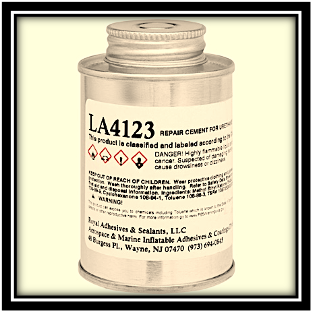
Dimethyl decarbonate (DMDC), aka Velcorin®, also known as dimethyl pyro-carbonate, is an organic compound of the carbonate ester family. It is used as a food additive (E242) for the preservation of beverages, without altering taste, smell or color. Its chemical formula is C₄H₆O₅, curiously identical to that of malic acid, although its structure and properties are totally different. It is a colorless liquid, solid below 16–18 °C, which hydrolyses completely on contact with water, breaking down into carbon dioxide (CO₂) and methanol. Its use is particularly indicated when the wine must be sterilized without being able to be sterile filtered, pasteurized or sulfated. At low concentrations, it destroys yeasts and fermentation bacteria, and in high doses it inactivates pathogenic bacteria, certain fungi and viruses. In wine, it is mainly used to remove or reduce Brettanomyces yeasts, which are responsible for the undesirable "barnyard" smells. However, its limitations are real, and it has been shown that at the maximum legally authorized dose of 200 mg/l, DMDC, it is effective against yeasts at low concentrations, but ineffective against lactic acid (Lactobacillus) and acetic acid (Acetobacter) bacteria.
Consequences for human health
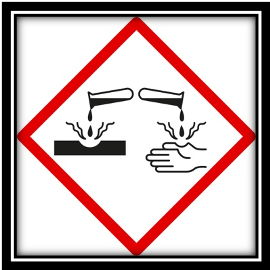
For growers and winemakers, pure DMDC is extremely dangerous. Its direct contact with the skin or eyes can cause severe irritation, and inhaling its vapors can cause significant respiratory discomfort. Wearing personal protective equipment, such as gloves, goggles, and a respirator, is essential when handling it. In addition, it is mandatory that it be stored in airtight containers, away from humidity, with strict safety measures in the cellars. If Velcorin® is an antimicrobial that kills just about everything living in wine, and consumers are increasingly concerned about what they drink, how is it possible that it is never talked about?
Beware of danger
For the consumer, the authorities consider that the very low residual concentrations, almost non-existent in their original form that can remain in beverages after treatment with DMDC, do not raise any toxicological concern. However, the central point to understand is that of the toxicity of the products of its decomposition, namely methanol, dimethyl carbonate (DMC), methyl ethyl carbonate (MEC), and methyl carbamate (MC).
Methanol
A marginal risk at authorized doses
The minimum toxic dose of methanol is 1,000 mg per kilogram of body weight. The amount of methanol generated by DMDC in a beverage is less than this value by a factor of 100. Knowing that humans naturally metabolize between 1,000 and 2,000 mg of methanol per day via their regular diet, there is a wide margin of safety between the intake of methanol from DMDC and the toxicity threshold. However, any additional consumption of methanol, on top of that already present in the diet, can cause adverse effects on human health.
Methyl carbamate (MC)
The most worrying grey area
This is the most delicate point, and the least known to the general public. When DMDC reacts with amino compounds found in wine, amino acids or biogenic amines, it forms methyl carbamate. However, this compound belongs to the carbamate family, a chemical cousin of the controversial ethyl carbamate, or urethane. Ethyl carbamate is genotoxic and multi-site carcinogenic, which has led government institutions to classify it as a probable human carcinogen. In the United States, the regulation of ethyl carbamate in wines is mainly based on voluntary limits established by the FDA in collaboration with the wine industry, rather than strict legal constraints with a voluntary limit of 15 ppm is cited for table wines, and 60 ppm for fortified wines. Europe relies on the same voluntary limits, without binding regulations. Canada has a limit of 30 ppm. The crucial scientific question therefore remains, namely whether the methyl carbamate produced by DMDC is as dangerous as its ethyl cousin?
"Big headache"
It's the fault of the sulfite
Not really, unless you are intolerant to SO2 compounds. Methanol is highly toxic, and headaches are among its first symptoms, whether ingested, inhaled or absorbed through the skin. These symptoms often occur after a latency period of 12 to 24 hours, and sometimes up to 72 hours. They are accompanied by dizziness, nausea, vomiting, abdominal pain, and especially vision problems that can lead to blindness. As for carbamates, including methyl carbamate, and insecticides of the carbamate family regularly used in vines, they act on the nervous system and can cause headaches even in the event of light exposure.
So, can you make wine without Dimethyl Decarbonate (DMDC)?
The short answer is yes, absolutely, and it is even a sine qua non condition for certified organic, biodynamic or regenerative wines, depending on the label. It is therefore necessary to distinguish four categories, because they do not have the same level of requirement at all.
The label « Organic Wine »
Managed by the National Organic Program (NOP), refers to a wine produced from grapes grown according to NOP organic standards, vinified in a certified organic facility, containing no added sulfite, and excluding any use of Dimethyl Decarbonate. Be careful, the well-known American paradox is that any addition of sulfite relegates the wine to the lower category "Made with Organic Grapes".
The two Demeter categories
« Biodynamic Wine » and « Made with Biodynamic Grapes »
They both prohibit the addition of external aromatic yeasts, malolactic bacteria, enzymes, and tannins. DMDC, a synthetic chemical, is obviously excluded, but the addition of SO2 is accepted at low doses.
Label ROC (Regenerative Organic Certified)
Represents a standard including carbon sequestration in vineyard soils. It takes the NOP as a basis and adds additional requirements for soil health, animal welfare and social equity. Since it is built on top of the NOP, DMDC is also prohibited there.

The big lie « Natural Wine”
and practices reported without certification
The basic concept of a so-called "natural" wine is based on organic or biodynamic grapes, with an additional requirement that no inputs are added during winemaking, including sulfite (or only in minute quantities). This is the most radical approach in terms of non-intervention; and DMDC is therefore philosophically incompatible with natural wine by definition. But this lack of inputs comes at a price. Without technical intervention in winemaking, organoleptic defects cannot be excluded, and the most common are volatile acidity giving a vinegar smell, ethyl acetate producing a glue smell, and Brettanomyces imparting animal or leather aromas. In the United States, there is no state-recognized charter for the regulation or certification of natural wines. The American winemakers who claim to be part of the movement set their own rules. A winemaker can therefore legally call themselves a "natural wine producer", use DMDC, selected yeasts, sulfite at 100 ppm, and not be subject to any sanctions or controls. The term "natural" is, in this context, a marketing promise, not a legal guarantee. Only NOP, Demeter or ROC certifications offer a binding and verified framework, but none of them uses the term "natural". There are also winegrowers "practicing organic, biodynamic or sustainable farming" without certification, and this is where the reality becomes more complex. Many American winemakers practice organic or biodynamic agriculture without being certified, either by philosophical choice or to avoid the costs and administrative burden of certifications, which are particularly difficult to assume for small artisanal farms. These winegrowers can legally use DMDC or any other input in the vineyard or in the cellar, not being subject to any certification that prohibits it, even if they claim a "natural" philosophy in their communication. It is precisely this regulatory gap that worries consumers, because without verified certification, label claims can be misleading.
Attention
There are natural alternatives to DMDC and other chemicals
To avoid DMDC while guaranteeing the stability of the wine, eco-responsible winemakers rely on a set of preventive practices and alternative solutions. If the hygiene of the cellar and equipment is managed seriously and meticulously, these alternatives can be very effective. But for this, it is imperative to have a minimum of knowledge of wine chemistry, because the use of natural non-synthetic substances such as teas, infusions, concoctions in the vineyard, or the use of chitosan, lysozyme, or bio-protection by competing yeasts such as Metschnikowia yeast in the cellar, can cause chemical reactions that are just as worrying for the consumer as those induced by industrial chemical compounds.
In addition, two serious concerns remain about the use of DMDC
Data on the long-term effects of methyl carbamate are still insufficient, and no one calculates its cumulative daily exposure to DMDC by adding morning juice, midday soda and evening wine. This is difficult to establish for an additive that disappears without leaving any detectable traces. A real "Godzilla" hiding under the guise of a harmless "Bambi".
Irony of fate "Made in America"
The term "natural" does exist in U.S. federal law (27 CFR §4.21), but it simply refers to a grape wine that does not contain added grape alcohol is a purely technical definition that has nothing to do with the philosophy of natural wine as understood by consumers.
Conclusion
The solution: ethics, the compass of healthy wine
Ethics is not a code imposed from the outside; it is the inner requirement that arises as soon as man lives with his fellow human beings. Every relationship calls for a rule, not that of the law, cold and constraining, and made to be circumvented, but that of conscience, living and personal. To act ethically is to recognize in the other a dignity equal to one's own. It is to choose, freely, not to harm, even when we could. Therein lies this daily, silent and demanding effort of man towards man.
That's why at Bonde, we put a sticker on each bottle, guaranteeing our research work and our commitment to the origin of the wines we select. Not out of a legal obligation, because no law obliges us to do so, but out of conviction. Because for us, transparency is not a commercial argument, it is a moral posture. So, the real question is not whether DMDC is dangerous, whether sulfites cause a headache, or whether natural wine delivers on its promises. The real question is this:
In a world where 76 additives can legally enter your glass without you being informed, can we still talk about an informed choice? Between the fraudster who steals your money and the one who, in silence, deprives you of the right to know what you are drinking. Which one should we really talk about?
Addendum:
Wine, like any alcohol, carries health risks. Excessive consumption can lead to addictions, serious illnesses and accidents. Drinking less means living better. Alcohol abuse is dangerous for your health, consume in moderation, because quality is always better than quantity.
54 Church Street, Cambridge MA 02138
Powered by Lightspeed
Display prices in:USD
