HOURS: TUESDAY - SATURDAY 12-9PM // CLOSED SUNDAYS & MONDAYS
Revelation: Who is the missing link
https://drive.google.com/file/d/1-Gb7JqIBJA8a9rNQn...
Revelation
Who is the missing link
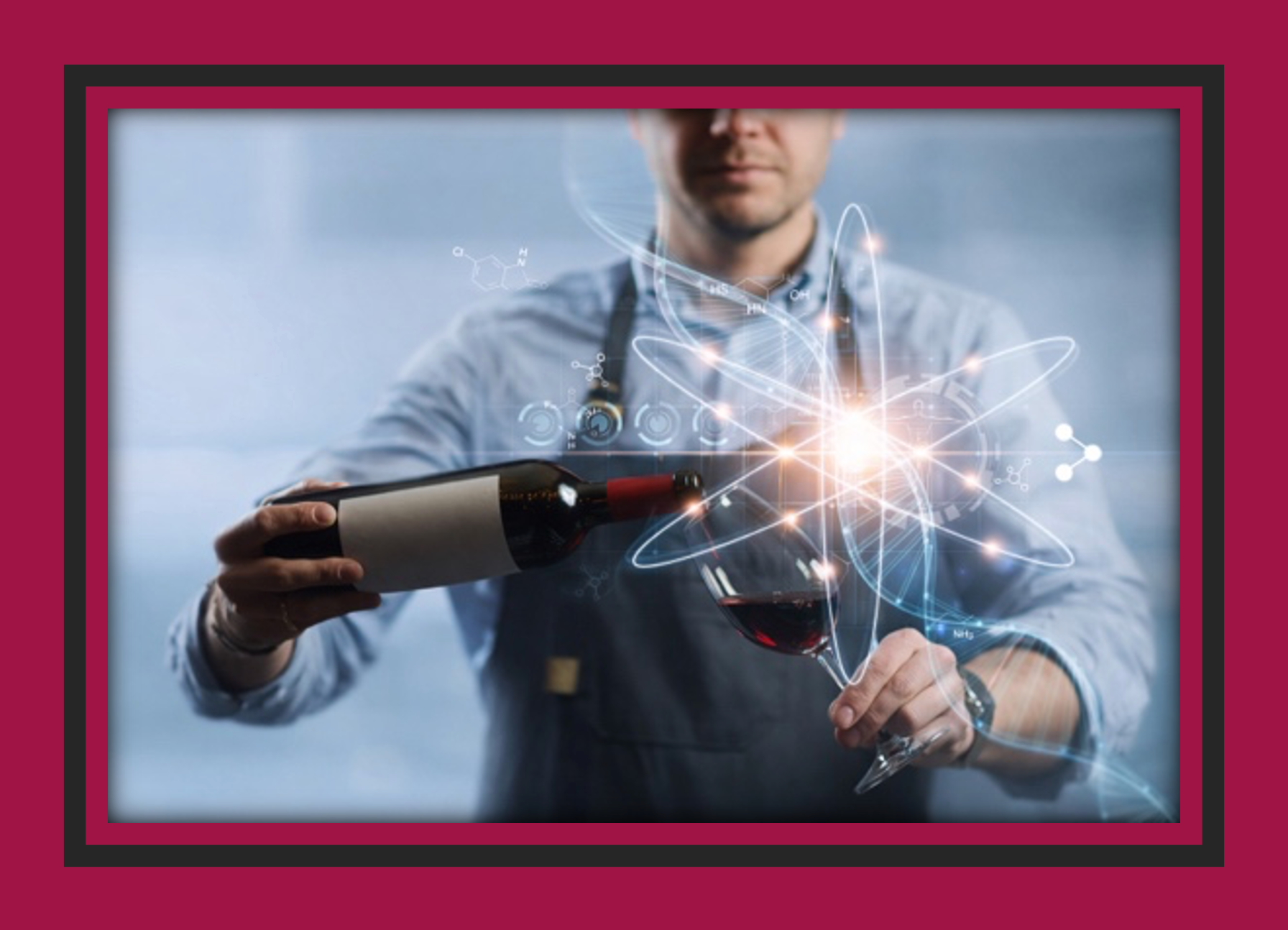
A reflection on a triangular sommelier between humans and AI
Introduction
After more than forty years of study and observation, a fundamental question arises for me today:
What if the perfect academic pairing between a wine and a food did not exist as a universal truth, but as a deeply personal experience?
The science of sommelier pairings has always been built on precise rules, based on the balance of flavors, the complementarity of textures and the molecular logic of food and wine. This approach, rigorous and effective, is nevertheless based on a widely accepted implicit assumption, namely that we all perceive tastes in a similar, universal and unnuanced way. However, science and everyday experience demonstrate the opposite. Each individual has a unique sensitivity, shaped by their genetics, sensory history and unconscious learning, directly influencing their preferences as well as their rejections. What one perceives as harmonious may seem unbalanced to another. It is precisely in this complexity, which has long been difficult to describe and structure, that artificial intelligence is now opening up the possibility of a new path. This technology, thanks to its ability to analyze large data sets, to cross-reference sensory, molecular and behavioral variables, and to reveal correlations invisible to human analysis, would make it possible for the first time to integrate the individual, a real missing link, at the very heart of the taste equation. Far from replacing the expertise of the sommelier, this technology can increase its reach, by making possible a detailed and personalized understanding of the mechanisms of pleasure. Thus, a new era for wine is taking shape. That of a tailor-made assistant sommelier, where the pairing is no longer just between a dish and a wine, but between a dish, a wine... and you.
Towards a silent revolution in the world of wine
What if the perfect match doesn't exist? For decades, sommeliers and gastronomes have agreed on a fundamental principle: a good food and wine pairing is based on precise rules of balance, contrast and complementarity. An acidic wine to cut through the fat, tannins to structure a meat, aromas that respond to each other. This linear molecular approach, based on the chemistry and physics of food and liquids, has shaped an entire culture of taste for centuries. It works, undeniably. But it is based on a hypothesis that is rarely questioned. The one that we all perceive tastes in the same way. However, it is precisely on this point that the very foundations of the agreements must be re-examined.
The limits of a "linear" approach to taste
The classic food and wine pairing can be described as linear, because it is based on a direct relationship between two elements: the dish and the wine. In this model, the structure of the wine, acidity, astringency, alcohol, is analyzed, which is harmonized with the texture of the dish, fat, crunchy, melting. But also the dominant aromas, fruity, vegetal or spicy, in order to make them correspond to the aromatic family of the wine. We then establish a logical coherence. This method, rigorous, coherent and often accurate, nevertheless has a major limitation: it ignores individual differences in perception, sensitivity and, above all, subjective memory.
Taste: a biological and emotional construct
To understand why a pairing can work for one person and fail for another, we need to dive into the mechanics of taste. This is built on the basis of two fundamental dimensions. The first is determined by our genetic background, a memory inscribed in our personal DNA, which influences the structure and sensitivity of our sensory receptors. This is why some people are more sensitive to bitterness, others to sulfur compounds, and still others to vegetable aromas. The second dimension is based on our sensory memory built up over time, made up of information recorded unconsciously. This baggage develops from the first weeks of fetal development until early adulthood. During this period, our brain combines smells, tastes, textures and emotions in what is known as Pavlovian conditioning. Thus, the same aromatic molecule can be perceived as pleasant, neutral or repulsive depending on the sensory history of each person. In addition to this biological basis, there is a determining factor: experience. A smell linked to a positive memory will arouse an immediate attraction, while a texture associated with a negative experience can lead to lasting rejection. These reactions, which are rapid and unconscious, do not involve reasoning, because they are the result of an instinctive filtering system. The subconscious mind acts as a binary mechanism that accepts or rejects, without nuance. It is this that largely determines our gustatory pleasure, or hedonic response. Thus, two individuals faced with the same agreement can react in completely opposite ways. This observation leads to an essential conclusion: there is no universally perfect food and wine pairing. Rather, there are agreements that are technically consistent, but not necessarily satisfactory for each individual. It is here that a new possible approach emerges, that of the individualization of taste.
Towards a "triangular" sommellerie
To go beyond the limits of the classical model, it becomes necessary to introduce a third dimension: the individual. The pairing is no longer limited to a relationship between the dish and the wine but is part of a triangular dynamic: Unique correlation between the dish, the wine and the individual.
Why triangular? Because it is no longer just a question of associating objective characteristics, molecules, textures, but of filtering them through the taster's subjectivity. This profoundly transforms the method. Where we traditionally built an agreement from what we like, this approach proposes a strategic reversal, starting by identifying and eliminating what we don't like. Rejection, often unconscious, is more stable, more powerful and more structuring than pleasure itself. To achieve this, it is essential to build an individual sensory profile from major aromatic and cultural families: Plants: fruits, vegetables, herbs, spices, etc., then group them into cooking styles. The objective is to identify the areas of rejection: unpleasant textures, aromas, poorly perceived physical sensations such as excessive acidity, marked bitterness or a feeling of softness. These clues, seemingly innocuous, are in fact extremely revealing. A person who does not enjoy overcooked peas, puree, or overripe fruit often expresses an overall rejection of soft textures or certain flavor profiles. This rejection can then be transposed to wine, naturally excluding round, low-acid or heavy wines.
The second step is to analyze the aromatic molecules. Each food and each wine have a molecular signature structured in large families: vegetal, fruity, spicy, empyreumatic, mineral, or animal. These molecules interact with each other according to logics of complementarity, amplification or transformation, generating responses of pleasure or rejection. Understanding these interactions allows us to go beyond a descriptive approach to enter into a logic of sensory correlation. To do this, it is necessary to distinguish between two complementary dimensions: taste and aromas. Taste is based on five fundamental families: sweet, sour, salty, bitter and umami, to which are added physical sensations such as astringency (tannin), heat, freshness and texture.
As for the aromas, which are derived from volatile molecules, they are grouped into large families: fruity, vegetal, floral, spicy, mineral, empyreumatic and animal, with variations such as sulfur, milky or oxidative notes. These molecules never function in isolation, they are organized into complex ensembles, or "clusters", which determine the overall perception. The same molecule can thus be perceived differently depending on the individual. This structuring into families, subfamilies and key molecules then becomes a functional tool for analyzing, filtering and cross-referencing sensory data, paving the way for a truly personalized approach.
Mapping preferences and pleasure
Once these mechanisms have been identified, the third step would be to filter and cross-reference the data. Wines with aromatic signatures associated with rejection would be eliminated, as would textures incompatible with the individual's sensory profile. This selection is based on a fundamental reality, namely that everyone already unconsciously chooses their food according to their own sensory system, seeking to maximize pleasure. This pleasure is the result of a complex neurobiological mechanism, orchestrated by the brain's reward system. It combines sensory perception, memory, emotion and anticipation. The pleasure we feel during a tasting is orchestrated by several regions of the brain and by the release of dopamine, a neurotransmitter linked to anticipation and motivation. This dynamic involves the nucleus accumbens, the orbitofrontal cortex, the amygdala and the hippocampus. Gustatory pleasure results from the integration of taste, smell and physical sensations in the mouth. The brain is constantly looking for sensory balance: excess acidity, sugar or tannins can generate rejection, while a harmonious balance promotes pleasure. The latter is therefore not an objective reality, but a dynamic construction specific to each individual. Our eating habits thus become an implicit mapping of our preferences and rejections. It is on this basis that the last step takes on its full meaning: A construction of personalized agreements.
Conclusion
Thus, if pleasure is neither universal nor totally rational, but the fruit of an intimate construction combining biology, memory and experience, then sommellerie can no longer limit itself to a linear reading of chords. It must evolve towards a more refined, more human approach, where the individual becomes the central variable. This paradigm shift reveals the full power of artificial intelligence. By cross-referencing sensory, molecular, behavioral and emotional data, it would make it possible for the first time to accurately map our hedonic profile, to identify our areas of rejection as our deep sources of pleasure, and to reveal this unique balance, this sensory convergence points specific to each of us. From this perspective, AI does not replace the sommelier, but rather becomes an extension of it. This approach could pave the way for extreme personalization of the taste experience. There remains a fundamental, almost dizzying question:
If we can now get close to this "G-spot" of sensory pleasure with precision, how far will artificial intelligence be able to guide us in the discovery of ourselves?
Powered by Lightspeed
Display prices in:USD
