HOURS: TUESDAY - SATURDAY 12-9PM // CLOSED SUNDAYS & MONDAYS
Slow: In praise of the rediscovered slowness
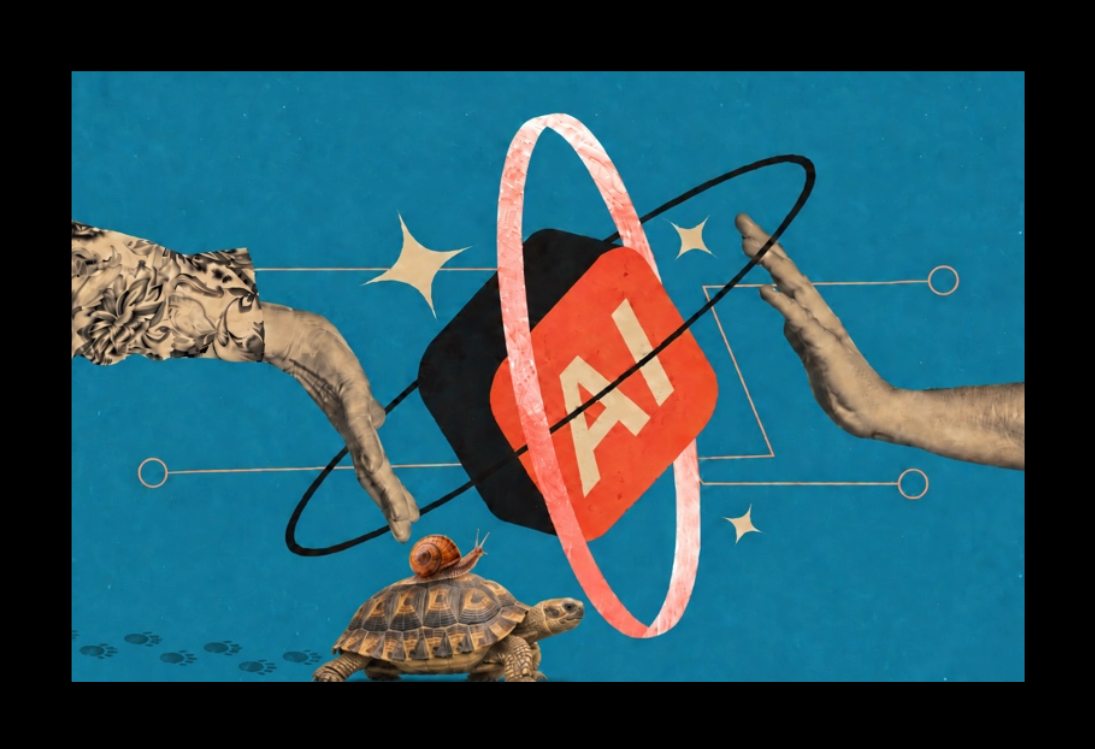
SLOW
In praise of the rediscovered slowness
There is something strange in our time. Never has information circulated so quickly, never have the answers been so immediate; and yet, never have we seemed so out of breath, so worried about this evolution that could, according to some, swallow us up and even annihilate us. Like a news feed that never stops, with AI that answers before we have even finished formulating the question. Notifications that require a reaction in a fraction of a second without filter, without reflection, without real understanding. So speed is no longer a luxury, it has become a pressure that promises us that artificial intelligence saves us time, but in practice, it seems to steal it from us by filling every gap of silence, every moment of reflection, with a ready-made answer. So, I propose something else, not a rejection of technology, not a naïve nostalgia for a past without screens, but rather a path: that of slow. Slow down to better understand, savor, appreciate, breathe, and take the time to doubt, to search, to make mistakes, to reconnect with our senses, our intuitions, our first sense rather than receiving a truth predigested in three seconds. A reading space to question our relationship to time, to information, and to these tools that claim to think, drink and eat for ourselves.
Slow: a not-so-new movement
The idea of slowing down was not born with the anxiety of AI because it is almost forty years old, and it started on a plate. It all started in 1986, in Rome. A McDonald's was about to open in Piazza di Spagna, in the historic heart of the city, and Carlo Petrini, an Italian journalist and gastronome, saw it as an unbearable symbol. That of the standardization of taste, the disappearance of local know-how, fast food as a metaphor for a world that swallows everything without chewing. In reaction, he founded the Slow Food movement in 1989, with an assumed symbol: the snail. The manifesto was simple but radical for the time, namely that of defending the right to pleasure, food biodiversity, local producers, and opposing industrial standardization. Carlo declared, "This is not a nostalgia of old gourmets, it is a political criticism of speed as the supreme value." Today, more than forty years after its founding, the movement claims branches in more than 160 countries.
Slow Wine
Wine as resistance
In the logical wake of Slow Food, Slow Wine was born, a guide and a movement that apply the same philosophy to the vine, namely that of favoring winemakers who work with respect for the soil, the natural rhythms of the vine, rather than standardized mass production. A wine is judged not only by its taste, but by the consistency of the practice that produced it, a form of ethics of slowness applied to the land. The Slow Wine Guide USA listed 2026 there are 409 certified American wineries and more than 2400 worldwide.
Slow Wine Bar
Even if there is no official "Slow Wine Bar" label or network on a large scale, there are several interesting things that touch on the concept. All of them start as part of the Slow Wine Fair, a pop-up called "The Slow Bar" offers tastings of spirits and liqueurs from ethical and sustainable companies. It is a pop-up bar that hosts meetings and tastings of spirits from ethical and sustainable companies, with thematic sessions where each exhibitor has 30 minutes to present their products. It is a direct extension of the Slow Food/Slow Wine philosophy applied to the world of the bar. Slow Wine Fair. A broader concept of "Slow Bar" was born, especially in coffee and tea culture, especially in Asia. The idea is to remind people that enjoying a drink is a process that begins long before the first sip, a kind of beverage version of omakase, where the gesture of preparation becomes a ritual in its own right rather than just a quick transaction. It's a perfect metaphorical track to illustrate your chapter on slowness versus immediacy.
Bertil, founder of Bonde Fine wine and Maison at Bonde
A way of life
Since the 1980s, Bertil Jean-Chronberg has defended a way of life based on time, attention, transmission and human relationships. Wine is one of them, but it is only an expression of it, because for Bertil, cooking, eating, sharing, hospitality, listening, conversation, and the link between people have always occupied a central place in his vision. Long before the notions of Slow Food, Slow Wine or Slow Life became widely known, Bertil already favored artisans, independent producers, products with a history, meals that we take the time to prepare and share, and places where we can still talk, listen and meet others. For him, slowing down does not mean living less, but living more, in order to choose better, taste better, listen better, understand better. It was therefore natural and normal at Bonde Fine Wine and Maison at Bonde that this philosophy finds concrete expression today. To create a place where time, others, wine, food, music and conversation allow us to recreate links, curiosity and pleasure. A simple idea has guided this approach for more than forty years: to take the time to live, rather than simply consume life.
Maison at Bonde
A timeless refuge
This is also why Maison at Bonde was imagined as a place where you can sit, enjoy a flight, share a snack, listen to a vinyl record and chat. A place where time is not wasted, but a place that is dedicated to discovery. Because for us, slowing down does not mean complicating wine. It simply means it
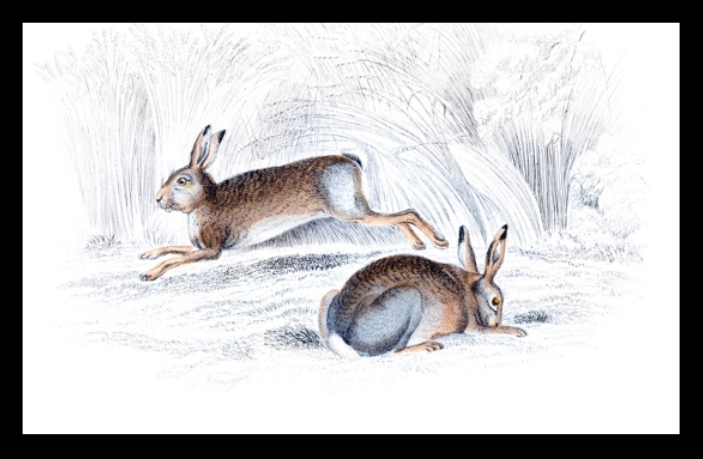
The Hare and the Tortoise (1668 BC)
Jean de La Fontaine
There is no use in running;
one must start at the right time.
The Tortoise said this to the Hare one day:
“I wager that you will not reach
that goal as soon as I do.”
“As soon as you?” said the swift-footed creature.
“Dear friend, you must have lost your mind.
Go and purge yourself four times over;
you surely need it.”
“Lost my mind or not,” replied the Tortoise,
“I still say I will beat you.”
So, it was agreed.
The finish line was marked,
and both set off.
Our Hare had only a few strides to make.
He was used to leaving far behind
the dogs that chased him across the fields.
He therefore thought he had plenty of time
to graze, to sleep,
and to listen to where the wind was blowing.
He let the Tortoise go ahead,
slowly making her way
with steady effort.
The Tortoise kept moving,
at her own pace,
but without ever stopping.
The Hare, meanwhile, treated the contest lightly.
He believed his honor required him
to wait until the very last moment.
He wandered, he rested,
he amused himself with everything
except the race itself.
At last, when he saw
that the Tortoise was almost at the finish,
he shot forward like an arrow.
But his great speed came too late.
The Tortoise arrived first.
“Well?” she said.
“Was I right?
What good is your speed
when you do not use it wisely?
And what would happen
if you had to carry your house upon your back?”
Moral:
Slow and steady wins the race.
Santé
Bertil
Powered by Lightspeed
Display prices in:USD
