HOURS: TUESDAY - SATURDAY 12-9PM // CLOSED SUNDAYS & MONDAYS
Vol. 50 - "The Judgement of Paris"
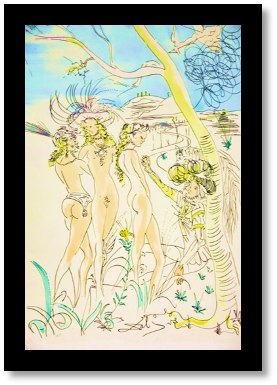
Salvador Dali Le Jugement de Paris 1970
Click here for the pdf-formatted version
When myth exceeds reality
50 years later
Book of Bertil #50
There are questions that, by dint of being asked, almost end up becoming rituals. At the shop, or almost every day, a customer looks at me with a mixture of curiosity and disbelief. After a few words exchanged, and no doubt betrayed by that slight French accent that stubbornly refuses to disappear, the inevitable question falls: "How is it that I only sell American wines?" I must admit that this always surprises me a little. And, I readily admit, it amuses me too. Because yes, I was born in France. Yes, I was trained, even shaped, to the demands of French wine and the new world. I competed on international stages where old-world wines and spirits were both the reference and the playground. For years, my oenological compass pointed resolutely to these terroirs steeped in history, where each bottle seemed to carry within it a fragment of eternity. And yet, as is often the case in wine, it only takes a moment, a reading, a click to shake the most established certainties. For me, this turning point dates back exactly forty years this week, when I discovered an article in a French magazine dedicated to the tenth anniversary of the Judgement of Paris of 1976. An event that we thought we knew about. A myth, almost. Until it began, slowly, to go beyond reality.
The Judgement of Paris **
May 24, 1976
Hotel InterContinental, Paris
CHAPTER 1.0
Verse 50.1.01: Why? The context of an unexpected challenge
In the mid-1970s, the world of wine was based on an almost immutable certainty. The greatest wines are from the old world, and in particular from France and Italy, but let's not exaggerate anything. Bordeaux, Burgundy, Champagne...these names do not only designate regions, they embody a form of absolute. Elsewhere, wine is produced. Here, we touch on the sacred. In this solidly anchored landscape, the very idea that a wine from another continent can compete is, for many, fantasy, or charmingly naïve. And yet, while Europe is looking the other way, something is fermenting on the other side of the Atlantic. In California, the consequences of Prohibition and the migratory movements of the post-war period have, paradoxically, sown the seeds of a revival. A new generation of winegrowers, often trained in Europe or inspired by its great models, is setting up shop with a clear ambition. To produce not "good local wines", but truly exceptional wines that can compete with the exceptional quality and longevity of the wines of the old continent. So in Napa Valley, the scenery changes. Of course, European grape varieties had been present there for a long time, but it was after 1933, at the end of Prohibition, that everything accelerated. Plantations are rethought, varietal choices are refined, and above all, methods are evolving. Chardonnay, Cabernet Sauvignon, Merlot, Cabernet Franc...these mythical varieties find a new field of expression, driven by an approach that is both rigorous and daring and modern. The results are starting to be remarkable, but in Europe, people are not yet listening. Or rather, we hear without really believing.
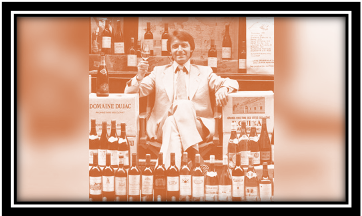
Verse 50.1.02: Steven Spurrier, the American "messiah"
As is often the case in the world of wine, great revolutions are born in an almost innocuous way, around a tasting, a conversation, or a slightly audacious intuition. In the mid-1970s, Steven Spurrier was a British wine merchant based in Paris, where he ran a small shop as well as a tasting school frequented by a curious international clientele...but still deeply attached to classical hierarchies. At that time, offering a great Bordeaux or a beautiful Burgundy was obvious. Offering something else borders on exoticism. But it was during a trip to California that Spurrier, guided more by curiosity than by real conviction, discovered wines that surprised him. Not because they imitated the great European vintages, but because they dared to stand up to them. Back in Paris, on the eve of the American bicentennial celebrations, the idea began to gain ground. What if these wines, still ignored or politely dismissed by European experts, deserve to be judged on equal terms? Intuition then becomes a project by imagining a blind tasting bringing together some of the best French wines and a selection of these Californian wines. Nothing provocative, at least on the surface, and almost an educational exercise. A tasting like so many others in his academy.
Verse 50.1.03: The Establishment of the Battlefield
The objective is not so much to prove the superiority of American wines as to arouse curiosity and to offer an educational exercise for its students as well as wine professionals. The event was organized on May 24, 1976, in Paris, at the InterContinental Hotel. The principle is simple and the structure rigorous:
- The wines will be tasted blind.
- The judges will not know the identity of the bottles served to them.
- Each wine will be presented anonymously, so that only intrinsic quality is evaluated, without influence of label, reputation or origin.
- Two categories will structure the tasting: the first concerns white wines, opposing Chardonnays from Burgundy to those from California, and the second concerns red wines, mainly Californian Cabernet Sauvignon confronted with great Bordeaux.
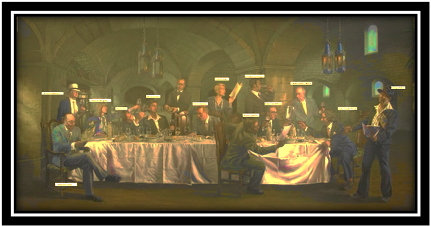
- Assemble a panel of highly regarded and impartial judges. So, Steven Spurrier invites for this event:
- Pierre Brejoux: Inspector General at the INAO
- Claude Dubois-Milot: Director of the Gault & Millau guide
- Michel Dovaz: Oenological Institute of France
- Patricia Gallagher: Event co-organizer and Spurrier collaborator
- Odette Kahn: Editor-in-Chief of La Revue du Vin de France
- Raymond Oliver: Chef of the restaurant Le Grand Véfour
- Steven Spurrier: Wine merchant and organizer
- Pierre Tari: Owner of Château Giscours in Margaux
- Christian Vannequé: Sommelier of the restaurant La Tour d'Argent
- Aubert de Villaine: Co-director of the Domaine de la Romanée-Conti
- Jean-Claude Vrinat: Owner of the restaurant Taillevent
- George Taber, a journalist from Time, who would be the only journalist present at the tasting.
These tasters embody an undisputed elite of the French wine world. Their expertise and reputation give considerable weight to the tasting results, and yet, no one expects an upheaval. For most of the participants, the outcome seems to be written in advance and indisputable: "French wines should naturally prevail." And yet...this tasting would become one of the most significant events in the history of wine. And, on a personal level, the one that would change everything in my career as a sommelier.
Verse 50.1.04: Wines engaged on the battlefield
Californian white wines:
- Chateau Montelena Chardonnay 1973
- Chalone Vineyard Chardonnay 1974
- Spring Mountain Vineyard Chardonnay 1973
- Freemark Abbey Chardonnay 1972
- Veedercrest Vineyards Chardonnay 1972
- David Bruce Winery Chardonnay 1973
Burgundy white wines:
- Meursault Charmes Roulot 1973
- Beaune Clos des Mouches Joseph Drouhin 1973
- Bâtard-Montrachet Ramonet-Prudhon 1973
- Puligny-Montrachet Les Pucelles Domaine Leflaive 1972
The second series will concern red wines
Californian wines:
- Stag's Leap Wine Cellars Cabernet Sauvignon 1973
- Ridge Monte Bello Cabernet 1971
- Heitz Cellars Martha's Vineyard Cabernet 1970
- Clos du Val Cabernet Sauvignon 1972
- Mayacamas Vineyards Cabernet 1971
- Freemark Abbey Cabernet Sauvignon 1969
The Bordeaux red wines:
- Château Mouton-Rothschild 1970
- Château Montrose 1970
- Château Haut-Brion 1970
- Château Léoville-Las-Cases 1971
*Each judge assigns a score out of 20 to each wine.
*Bottles are served anonymously so that the evaluation is based solely on appearance, aroma and taste.
CHAPTER 2.0
Verse 50.2.01: Primo
The result and the historical impact, almost a patriotic humiliation
To everyone's surprise, the results of the tasting caused a real shock.
In the white wine category, the wine that came in first place was Chateau Montelena Chardonnay 1973, obtaining the best average score ahead of several great Burgundy wines. In the red wine category, the surprise is just as great. The winning wine is Stag's Leap Wine Cellars Cabernet Sauvignon 1973, also produced in Napa Valley, ahead of several great Bordeaux, including Château Mouton-Rothschild, Château Montrose and Château Haut-Brion.
Here is the result for the winning white wines:
- Chateau Montelena, Chardonnay 1973 (Napa Valley, California)
- Meursault Charmes, Roulot 1973 (Burgundy)
- Chalone Vineyard, Chardonnay 1974 (California)
- Spring Mountain Vineyard, Chardonnay 1973 (California)
- Beaune Clos des Mouches, Joseph Drouhin 1973 (Burgundy)
- Freemark Abbey, Chardonnay 1972 (California)
- Batard-Montrachet, Ramonet-Prudhon 1973 (Burgundy)
- Puligny-Montrachet Les Pucelles, Domaine Leflaive 1972 (Burgundy)
- Veedercrest Vineyards, Chardonnay 1972 (California)
- David Bruce Winery, Chardonnay 1973 (California)
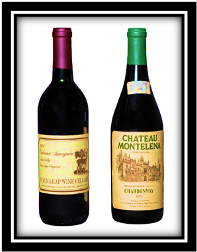
Here is the result for the winning red wines:
- Stag's Leap Wine Cellars, Cabernet Sauvignon 1973 (Napa Valley, California)
- Château Mouton Rothschild 1970 (Bordeaux, Pauillac)
- Château Montrose 1970 (Bordeaux, Saint-Estèphe)
- Château Haut-Brion 1970 (Bordeaux, Pessac-Léognan)
- Ridge Vineyards, Monte Bello 1971, California
- Château Léoville Las Cases 1971 (Bordeaux, Saint-Julien)
- Mayacamas Vineyards, Cabernet Sauvignon 1971 (California)
- Clos du Val, Cabernet Sauvignon 1972 (California)
- Heitz Wine Cellars, Martha's Vineyard Cabernet Sauvignon 1970 (California)
- Freemark Abbey — Cabernet Sauvignon 1969 (California)
Verse 50.2.02: Secondo
Even if the final ranking reveals that Californian wines can compete with the greatest French references, the real earthquake lies elsewhere. For the first time, a blind tasting, conducted by French experts, places American wines at the top in two major categories. And yet, one conviction persists. Almost intact, because if it is now admitted, half-heartedly, that New World wines can shine in their youth, one certainty remains deeply rooted. Only great French wines have this almost mystical ability to age, to transform, to sublimate over time. Californian wines, on the other hand, would be seductive...but ephemeral. So, thirty years later, the question comes to mind almost naturally:
What has become of it, with the hindsight of time? To answer this question, the same wines will be tasted again, under similar conditions.
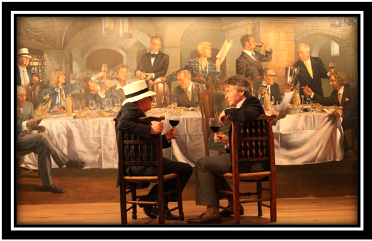
The Judgment of Paris
May 24, 2006
Copia Museum (Napa Valley) and Berry Bros. & Rudd (London)
Result for red wines:
- Ridge Vineyards, Monte Bello 1971, California
- Stag's Leap Wine Cellars, Cabernet Sauvignon 1973 (California)
- Château Montrose 1970 (Bordeaux)
- Château Haut-Brion 1970 (Bordeaux)
- Mayacamas Vineyards, Cabernet Sauvignon 1971 (California)
- Clos du Val, Cabernet Sauvignon 1972 (California)
- Château Mouton Rothschild 1970 (Bordeaux)
- Château Léoville Las Cases 1971 (Bordeaux)
- Heitz Wine Cellars, Martha's Vineyard 1970 (California)
- Freemark Abbey, Cabernet Sauvignon 1969 (California)
Even if there is no official, unique and unanimously recognized classification of white wines for the 2006 tasting, unlike the reds. During the re-tasting (especially in Napa), an indicative classification was established, very close to that of 1976. Here is the one generally reported:
- Château Montelena, Chardonnay 1973 (California)
- Meursault Charmes, Roulot 1973 (Burgundy)
- Chalone Vineyard, Chardonnay 1974 (California)
- Spring Mountain Vineyard, Chardonnay 1973 (California)
- Beaune Clos des Mouches, Joseph Drouhin 1973 (Burgundy)
- Freemark Abbey, Chardonnay 1972 (California)
- Bâtard-Montrachet, Ramonet-Prudhon, 1973 (Burgundy)
- Puligny-Montrachet Les Pucelles, Domaine Leflaive 1972 (Burgundy)
- Veedercrest Vineyards, Chardonnay 1972 (California)
Verse 50.2.03: First conclusion
Even if the first 5 wines are Californian, and this proves that American wines can age as well as great Bordeaux, contrary to what some critics claimed after 1976. One last myth remains to be verified:
Are American wines much more expensive than French wines?
The price of the battle
Here is a comparison of the current prices (recent vintages) of some emblematic wines linked to the Judgment of Paris. Prices may vary by vintage, market, and distributor, but this gives a good idea of today's price levels for the 2022–2023 vintages:
US
- Chateau Montelena, Chardonnay $70–$90
- Chalone Vineyard, Chardonnay $25–$45
- Spring Mountain Vineyard, Chardonnay $45–$75
- Freemark Abbey, Chardonnay $30–$50
- Veedercrest Vineyards, Chardonnay $40–$80
FRANCE
- Meursault Charmes, Roulot $600–$1000
- Beaune Clos des Mouches, Joseph Drouhin $90–$150
- Bâtard-Montrachet, Ramonet-Prudhon $500–$900
- Puligny-Montrachet Les Pucelles, Domaine Leflaive $400–$800
For the reds (2021–2022 vintage):
US
- Ridge Vineyards Monte Bello $200–$350
- Stag's Leap Wine Cellars, Cabernet Sauvignon (SLV/Fay) $150–$300
- Mayacamas Vineyards, Cabernet Sauvignon $90–$175
- Clos du Val, Cabernet Sauvignon / Heitz Wine Cellars, Martha's Vineyard $60–$120
- Freemark Abbey, Cabernet Sauvignon $50–$90
FRANCE
- Chateau Montrose $150–$300
- Château Haut-Brion $700–$1200
- Château Mouton Rothschild $800–$1500
- Château Léoville Las Cases $250–$450
So why do American wines seem more expensive than French wines?
This is a preconceived idea that circulates with the same confidence as a grand cru classé...and sometimes with an analytical rigor that is just as questionable.
Verse 50.2.04: After all, what wines are we talking about exactly?
The reasoning is often the same, implicit, but frighteningly effective. A multi-hundred-dollar Cabernet from Napa is compared to an entry-level or mid-range bottle of Bordeaux, easily found online. Immediate conclusion: American wines are overpriced. The matter seems to be settled. But if you think a little further, the exercise, it is true, but rarely practiced, the comparison becomes much less comfortable. Faced with the big names of Napa (Harlan, Screaming Eagle, Opus One etc.), it would be appropriate to line up the Bordeaux Premiers Crus and by the same token, a comparison of that of the Chardonnays. And here, curiously, the balance of power is balanced...or even reversed. But this comparison is less popular. Probably because it disturbs a certain well-established narrative. It must be said that at home, and in Napa Valley in particular, we have never really cultivated the art of modesty. High production costs, overpriced land, everything contributes to positioning these wines in a resolutely premium segment. Add to that an assumed marketing, a keen sense of storytelling, and an unabashed culture of luxury, and you get wines that clearly display their ambitions... as well as their prices. On the other hand, France has an almost unfair advantage with the depth and continuity of its offer. From thirst-quenching wine to historical monuments, everything coexists. This allows, with admirable consistency, to compare the American top of the range to the French mid-range, and then here is intellectual gymnastics as widespread as it is approximate. And then there is the weight of history. Since the Paris Judgment, Californian wines have gained legitimacy and, with it, a certain inflation of prestige. But again, this only concerns an elite. A handful of estates and often not those that positioned themselves in 1976, and especially not a state and an entire country. In reality, the conclusion is less spectacular, and therefore less seductive: It's not that American wines are more expensive. It's just that old (written journalist) or new (social media) influencers choose very carefully...with which they are compared.
Conclusion:
Basically, this story is not only that of a tasting that has become legendary. It is that of a slight tremor in a building that was thought to be immutable and, as is often the case, the walls have not really given way...but the cracks remained. Because let's be honest, the old continent has lost nothing that day, it remains the matrix of wine, its dictionary, its grammar, and sometimes even its poetry. She taught the whole world how to plant, vinify, name, classify, in short, how to think about wine. But then, the student ended up raising his hand. And even worse...he had the right answer.
Since 1976, then confirmed in 2006, and until today, American wines no longer ask for permission to exist. They invite themselves to the table. Sometimes even at the top of the tasting. Which, let's admit, is slightly annoying...especially for all the Francophiles of this world. And yet, despite the results, despite the time, despite the evidence in the glass, certain myths persist with a very French elegance. That of never really being wrong, only...a little early. So no, American wines are neither a curiosity, nor a fad, nor even a revenge. They have simply become what all wines aspire to be: a sincere expression of their terroir, with a different accent, certainly...but perfectly understandable. So that's why I haven't stopped for more than forty years to travel the states of our country to discover these artisan wines that have time to give us and this at a more than reasonable price for their qualities and integrity. So don't just be educated, be sophisticated, and together, let's continue our revolution by celebrating the 250th anniversary of a definitively an independent "winemaking" nation.
Mr. B
Memorandum: My words and opinions in these newsletters are and would always be personal, and I intend to offend. I always accept that others have the full right and duty to challenge me, to argue, and, if it is necessary, excommunicate me from their beliefs (often dull and hollow) because I would act the same way if it were the other way around.
** The Judgment of Paris is a Greek myth that led to the Trojan War. At a divine banquet, Eris throws a golden apple labeled "to the fairest." Hera, Athena, and Aphrodite each claim it. Zeus asks Paris, a Trojan prince, to decide. Each goddess offers him a bribe: Hera promises power, Athena offers wisdom and victory in war, and Aphrodite promises the love of the most beautiful woman, Helen. Paris chooses Aphrodite. He then takes Helen, who is already married to King Menelaus of Sparta. This act angers the Greeks and ultimately triggers the Trojan War, a major conflict in Greek mythology.
Powered by Lightspeed
Display prices in:USD
