HOURS: TUESDAY - SATURDAY 12-9PM // CLOSED SUNDAYS & MONDAYS
Vol. 53 - Judgment of Cambridge
Zero-Two-Wine-Three-Eight
The most opinionated wine Newsletter in America
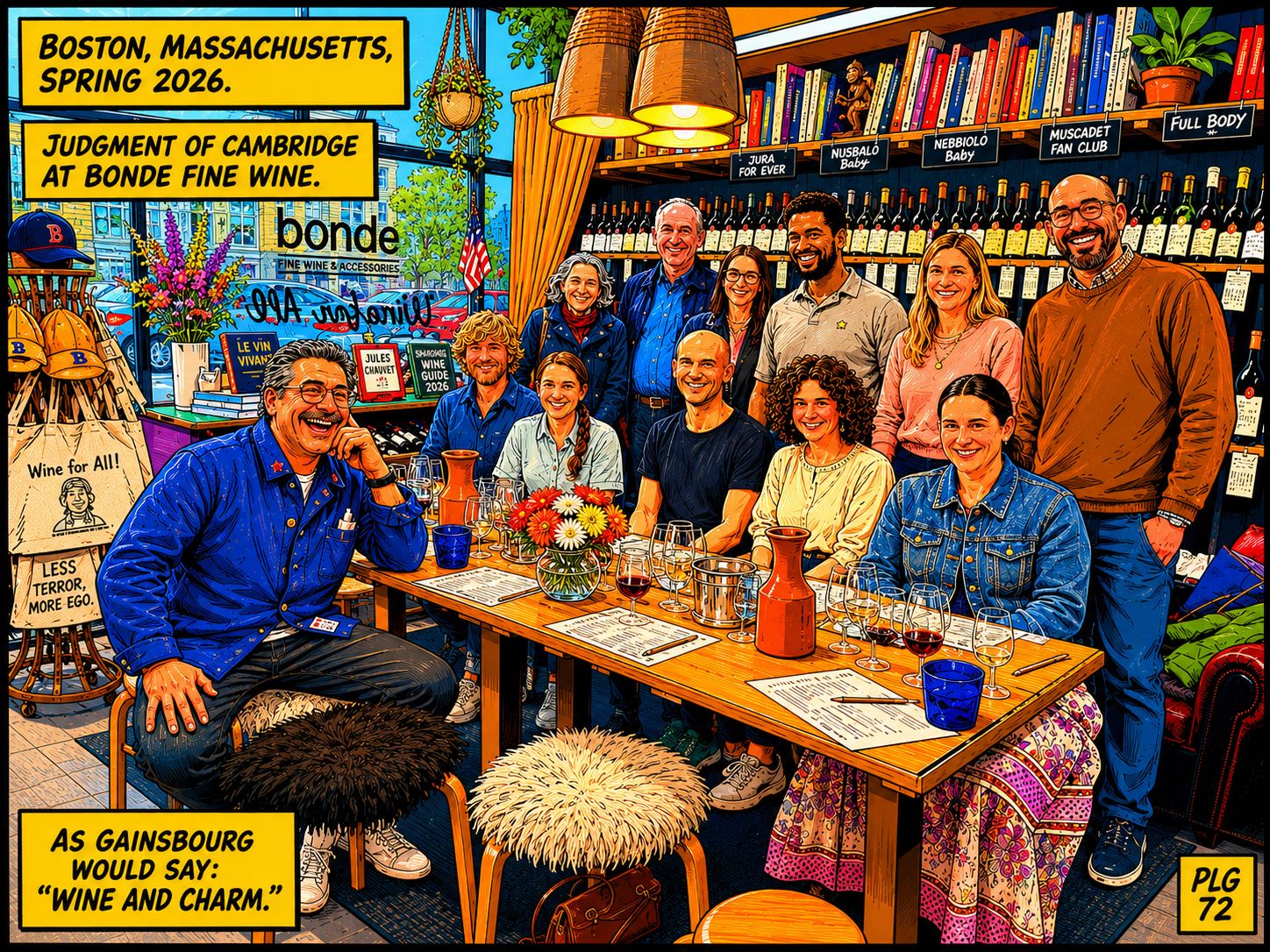
The result of our judgment... Au naturel!
Book of Bertil 53
Introduction
On May 21st, we organized our own Judgment of Paris at Bonde Fine Wine, to celebrate the 50th anniversary of this historic tasting held in Paris in 1976. But rather than faithfully reproducing the exercise, we chose to offer a more contemporary, and perhaps more surprising, interpretation. Unlike the classic blind tastings that will take place, or have taken place this month around the world, we have imagined a different format, faithful to our vision of wine and tasting. So, here are the participants, the judges and especially the results. Now it's up to you to discover them... and maybe let yourself be surprised.
CHAPTER 1.0
Verse 53.1.01: Vision and choices
History
In the mid-1970s, the world of wine was based on an almost indisputable hierarchy. Great wines come from Europe, mainly from France. Yet, in California, a new generation of winemakers is developing ambitious wines, made with noble grape varieties such as Chardonnay and Cabernet Sauvignon, using modern and rigorous methods. Steven Spurrier, a British wine merchant based in Paris, discovered these wines during a trip to California. Convinced that they deserved real recognition, he organized a blind tasting at the InterContinental Hotel in Paris on May 24, 1976. The aim is not to provoke the wine world, but to create an evaluation based on the actual quality of the wines, without the influence of reputation or origin.
Rules and methods
The rules were strict. The bottles are anonymous, the judges do not know the identity of the wines tasted and only the intrinsic characteristics are evaluated. Two categories are compared, namely Chardonnays from Burgundy against those from California, then great Bordeaux against Cabernet Sauvignon from California. Steven Spurrier also wants judges to be highly respected and impartial. It will therefore bring together a panel of 12 participants representing French experts in taste and knowledge of the time. The blind tasting method chosen by Spurrier challenges established certainties and paves the way for a more objective and international view of wine quality. Each category will be made up of a selection of 6 American wines and four of the most prestigious French houses. The result will be astonishing: out of the ten Chardonnays tasted and judged, three American wines will come in first place in the first four. And for Cabernet Sauvignons, Stag's Leap Wine Cellars Cabernet Sauvignon 1973 from Napa Valley, will be positioned first ahead of all Bordeaux. There is general astonishment.
CHAPTER 2.0
Verse 53.2.01: The Judgment of Paris by Bonde Fine Wine
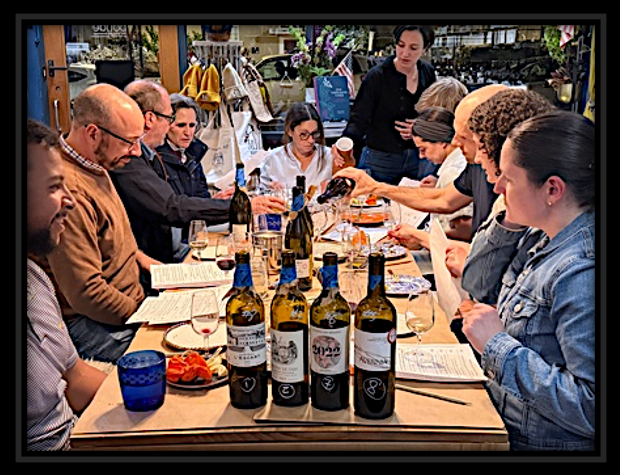
The rules will be strict. The bottles will be anonymous, the judges will not know the identity of the wines tasted and only the intrinsic characteristics will be evaluated. Two categories will be compared, namely Chardonnays from Burgundy against those from California, then red Bordeaux against American Cabernet Sauvignon. But in contrast to the Paris judgment, we chose only eight wines, four whites and four reds. In the whites category, we chose two distinct styles, the Chablis style and the Côte de Beaune wine style. For the red wines, we have chosen to stay for both countries in the style of the Bordeaux of the Left Bank. Even if it would have been easy to repeat the exercise with the same wine estates as those chosen in 1976, these wines which reflected a style and methods of winemaking typical of the time, today no longer reflect what the trends and consumer demand are looking for. So, we chose to select wines for the two countries that come only from minimal intervention practices, called natural and biodynamic wines. As for the evaluation and scoring grid, we chose exactly the same one established by Spurrier for the 1976 tasting, in order to be able to follow the same scoring methodology.
Verse 53.2.02: The Judges
Wine critics, sommeliers and tasting experts are largely biased in their evaluations by their technical approaches to wines, which are based on standardized, non-emotive assessments and scales. While these reviews are fair and beyond reproach from a professional point of view, they do not reflect the appreciation and expectations of today's ordinary consumers, the so-called "Customers". So, to remain relevant, of our time, and to orient the judgment in an epistemological way, we offered ordinary participants to participate voluntarily. The profile of the 12 participants was naturally varied: all aged between 20 and 50 , from different social backgrounds, different countries and different cultures. Some had tasting experience; others were completely novices. We could not ask for a better representation of our contemporary and current consumer society.
Verse 53.2.03: Liquid Participants
We also chose lesser-known vineyards, which are not emblematic of the big names in France and the United States. In other words, wines that are among the greatest names of non-interventionist winemakers of the 21st century.
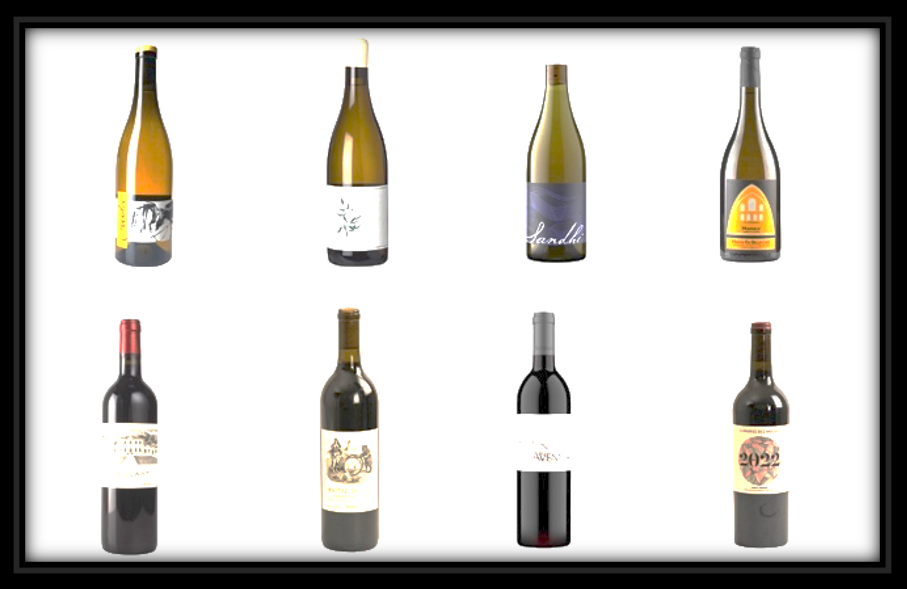
Chablis-style whites:
Domaine Pattes de Lou, "Vent d'ange" 2022, Chablis, France
Domaine Pattes Loup, run by Thomas Pico in Courgis in the Chablis region of northern Burgundy, has established itself as one of the most sought-after producers in the region thanks to an artisanal approach that is very respectful of the terroir. The estate is managed organically with low yields and extensive soil work to preserve the expression of the Kimmeridgian terroirs typical of Chablis. In the cellar, vinification is minimally interventionist: indigenous yeasts, little sulfur, long ageing on lees and no fining or filtration. This philosophy gives rise to precise, lively wines that have a strong identity. This wine is distinguished by a strong saline minerality, notes of lemon, green apple, damp stone and a fuller and deeper texture than the classic style of the appellation. Despite its status as an entry-level cuvée, it is considered by many wine lovers to be a wine at the level of a Premier Cru.
Arnot-Roberts Wines, Chardonnay 2024, Watson Ranch Vineyard, Napa Valley, CA
Arnot-Roberts is a Californian estate founded by Duncan Arnot Meyers and Nathan Lee Roberts, known for its artisanal and very precise approach to viticulture. The two winemakers work with plots often located in cool, high-altitude terroirs, favoring old and unproductive vineyards that are cultivated in a sustainable way. Their philosophy is based on minimal intervention to let the terroir express itself with purity: manual harvesting, natural fermentations, measured use of wood and a constant search for freshness and balance. This 2024 Watson Ranch Vineyard Chardonnay from Napa Valley perfectly reflects this style. The vineyard is known for its San Pablo Bay-influenced climate, which brings freshness and tension to the grapes despite Napa's heat. The wine stands out for a very mineral and saline expression, with aromas of citrus, green apple, white flowers and a slight smoky touch. On the palate, it combines energy, precision and refined texture, a far cry from the opulent styles traditionally associated with California. Arnot-Roberts wines now enjoy an excellent reputation among wine lovers and sommeliers for their elegance, balance and ability to express the identity of the great Californian terroirs.
Côte de Beaune-style whites:
Maison En Belles Lies, Monthélie 2020, Côte de Beaune, Bourgogne
Maison En Belles Lies is a Burgundian micro-merchant founded by Pierre Fenals, recognized for his artisanal and precise approach to the terroirs of Burgundy. The estate works with small plots of land that are sustainably cultivated, in a low-intervention philosophy aimed at preserving the identity of the place and the purity of the fruit. The vinification is based on natural fermentation, measured ageing and a discreet use of wood to preserve freshness, tension and balance. The Monthélie white 2020, made exclusively from Chardonnay in the Côte de Beaune, perfectly reflects this search for finesse and precision. The 2020 vintage, generous and sunny, offers a wine that is both ripe and energetic, carried by a beautiful natural acidity. This Chardonnay develops aromas of citrus, pear, yellow apple, white flowers and fresh hazelnut, accompanied by a slight chalky minerality typical of great Burgundy whites. On the palate, the wine is distinguished by its elegant texture, saline tension and long, refined finish.
Sandhi Vintners, Chardonnay 2022, Sanford & Benedict Vineyard, Sta. Rita Hills, Santa Barbara, CA
Sandhi is an iconic Santa Barbara winery founded by Rajat Parr and winemaker Sashi Moorman, major figures in the revival of California Coast wines. Their philosophy is based on a minimalist and very terroir-oriented approach, with sustainably cultivated vineyards in the coolest areas of California. The work in the cellar favors natural fermentations, a discreet use of wood and limited interventions to preserve the purity of the Chardonnay and the expression of the oceanic climate of Sta. Rita Hills. This 2022 Chardonnay from the Sanford & Benedict vineyard perfectly reflects this identity. It is a historic vineyard, planted in the 1970s, considered one of the great terroirs of California Chardonnay thanks to its cool climate, constant sea winds and poor soils that favor tense and precise wines. The 2022 vintage offers an elegant and energetic style, marked by aromas of lemon, green apple, white flowers, damp stone and fresh hazelnut. On the palate, the wine is distinguished by its saline minerality, refined texture and long, vibrant finish. Sandhi's Chardonnays are now highly sought after for their Burgundian finesse and their ability to accurately express California's coastal terroirs.
Bordeaux-style reds, Left Bank:
Closeries des Moussis 2022, Haut Médoc, Bordeaux, France
Closeries des Moussis is a small family estate in the Haut-Médoc region run organically and biodynamically by Laurence Vacher and Pascale Choime. Located on gravelly terroirs typical of Bordeaux, the estate is distinguished by a very artisanal and committed approach, favouring low yields, manual work and low-intervention vinification. Ageing is measured to preserve the freshness and expression of the fruit rather than the woody power often associated with classic Bordeaux wines. The 2022 vintage is sunny and concentrated, bringing a beautiful maturity of fruit while maintaining balance and energy. The wine develops aromas of blackcurrant, black cherry, violet, dry herbs and sweet spices, supported by a supple texture and fine tannins.
Château de l'Escart « Eden » 2020, Bordeaux Supérieur, France
Château de l'Escart is a historic Bordeaux Supérieur property run by the Laurent family, known for its commitment to organic and biodynamic farming. The estate favours an approach that respects the soil and the vine, with practices aimed at promoting the natural balance of the vineyard and a sincere expression of the Bordeaux terroir. The "Eden" 2020 cuvée illustrates this philosophy with an accessible, precise and generous style. The 2020 vintage, particularly successful in Bordeaux, combines maturity, freshness and beautiful concentration. The wine offers aromas of ripe black fruits, plum, blackberry, liquorice and spices, accompanied by a floral and slightly mineral touch. On the palate, it has a supple texture, well-integrated tannins and a balanced and greedy finish. Far from excessively woody styles, Eden highlights the purity of the fruit and its drinkability.
Avennia Wine, « Sestina » 2021, Columbia Valley, Washington
Avennia is an estate founded by the famous oenologist Chris Peterson in Washington State, known for producing wines that combine power, precision and elegance. The estate works with some of the best vineyards in the Columbia Valley, focusing on sustainable viticulture and controlled yields to best express each terroir. The "Sestina" 2021 cuvée is a blend inspired by the great wines of the Bordeaux left bank, dominated by Cabernet Sauvignon with a significant share of Merlot, Cabernet Franc and Petit Verdot. The 2021 vintage, warm and concentrated, offers great aromatic intensity while retaining freshness and structure. The wine develops notes of blackcurrant, blackberry, graphite, cedar, tobacco and spices, supported by fine tannins and a long mineral finish.
Maître de Chai, Cabernet Sauvignon 2022, Gala Mountain Vineyard, Napa Valley, CA
Maître de Chai is a Napa Valley artisan winery founded by Marty Winters and Alex Pitts, known for its hands-off approach and drive to produce precise, transparent wines. The work of the estate is based on natural fermentation, measured ageing and a constant search for balance in order to preserve the identity of the vineyards. Coming from a high-altitude terroir in Napa Valley, the wine benefits from cooler conditions that favor tension and aromatic complexity. The 2022 vintage offers a style that is both concentrated and energetic, with aromas of blackcurrant, black plum, violet, sage and hot rock, accompanied by an elegant and structured tannic texture. Far from excessively woody or demonstrative styles, this Cabernet emphasizes freshness, precision and finesse.
Verse 53.2.04: Results from May 21st, 2026
As the results have several facets, their interpretation may vary depending on the angle of analysis chosen. We therefore chose to focus on the conclusions that seemed to us to be the most relevant. We have deliberately limited our selection to three main results for the wines, proceeding individually for each category. The classification was first established for white wines, based on decreasing scores, and then the same methodology was applied to red wines. Finally, a global approach was used for all eight wines tasted.
The distinctions retained are therefore as follows: Best White Wine, Best Red Wine, and Best Wine Across All Categories.
Best White Wine
1st: Sandhi Vintners, Chardonnay 2022, Sanford & Benedict Vineyard
Sta. Rita Hills, Santa Barbara, Southern Central Coast, CA
2nd: Domaine Pattes de Lou, "Vent d'ange" 2022, Chablis, France
3rd: Arnot-Roberts Wines, Chardonnay 2024, Watson Ranch Vineyard
Napa Valley, CA
4th: Maison En Belles Lies, Monthélie 2020, Côte de Beaune, Burgundy
Best Red Wine
1st: Château de l'Escart "Eden" 2020, Bordeaux Supérieur, France
2nd: Maître de Chai, Cabernet Sauvignon 2022
Gala Mountain Vineyard, Napa Valley, CA
3rd: Closeries des Moussis 2022, Haut Médoc, Bordeaux, France
4th: Avennia Wine, « Sestina » 2021, Columbia Valley, Washington
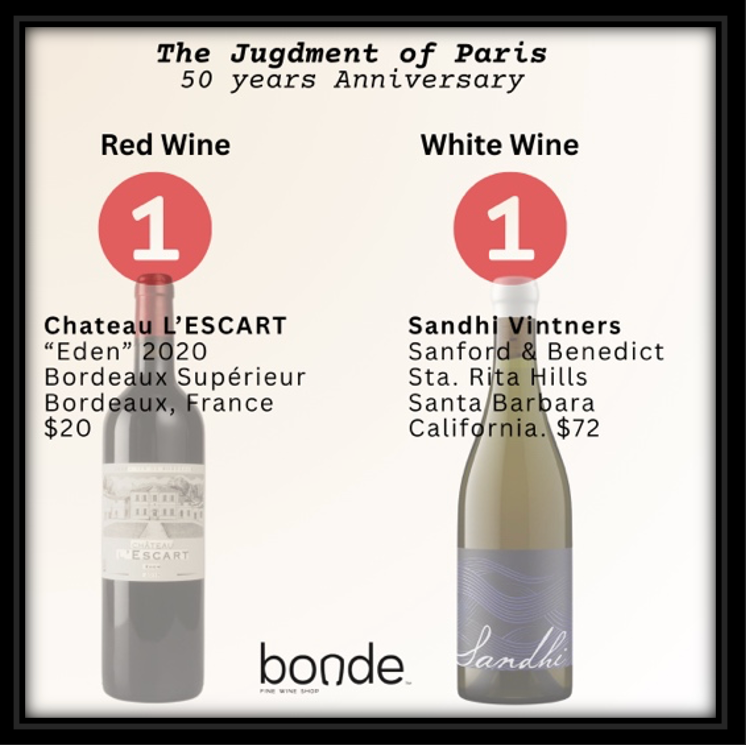
Best Wine in All Categories
First: Château de l'Escart "Eden" 2020, Bordeaux Supérieur, France — $20
Second: Maître de Chai, Cabernet Sauvignon 2022, Gala Mountain Vineyard, Napa Valley, CA — $68
Third: Closeries des Moussis 2022, Haut Médoc, Bordeaux, France — $61
Fourth: Sandhi Vintners, Chardonnay 2022, Sanford & Benedict Vineyard, Sta. Rita Hills, Santa Barbara, CA — $72
Fifth: Avennia Wine, « Sestina » 2021, Columbia Valley, Washington — $89
Sixth: Domaine Pattes de Lou, "Vent d'ange" 2022, Chablis, Burgundy, France — $70
Seventh: Arnot-Roberts Wines, Chardonnay 2024, Watson Ranch Vineyard, Napa Valley, CA — $57
Eighth: Maison En Belles Lies, Monthélie 2020, Côte de Beaune, Burgundy, France — $70
Conclusion
This contemporary reinterpretation of the Judgment of Paris has above all demonstrated that today, the quality of a wine is no longer limited to its prestigious origin or its belonging to the great historical standards. On the contrary, the results obtained reveal a fascinating convergence between French and American terroirs when they are worked with the same philosophy of respect for the living, minimal interventions and a search for authenticity. One of the most striking findings remains the excellent performance of red wines, which occupy the first three places in the overall ranking. However, the white wines also gave rise to real surprises, especially with the Chardonnay from Sandhi Vintners, whose precision and tension competed with the great Burgundian profiles. Through this tasting, certain stylistic boundaries traditionally associated with countries seem to be erased in favor of a purer expression of the terroirs and the sensibilities of the winemakers. But perhaps the most telling result is the victory of Château de l'Escart "Eden" 2020, a biodynamic Bordeaux Supérieur offered at a much lower price than the other wines tasted. This classification is a reminder that emotion, balance and pleasure are not necessarily linked to the prestige or price of a bottle. Finally, the choice of a jury composed of consumers with varied profiles rather than professional tasters made it possible to obtain a more instinctive, more up-to-date reading and probably closer to the real expectations of contemporary wine lovers. So, fifty years after the original Paris Judgment, a new question may arise:
"What if the great wines of tomorrow were no longer defined by their reputation, but simply by the emotion they provide, and by their human authenticity?"
*Memorandum:
My words and opinions in these newsletters are and would always be personal, and I intend to offend.
I always accept that others have the full right and duty to challenge me, to argue, and, if it is necessary, excommunicate me from their beliefs (often dull and hollow) because I would act the same way if it were the other way around.
54 Church Street, Cambridge MA 02138 · www.bondewines.com
Powered by Lightspeed
Display prices in:USD
