HOURS: TUESDAY - SATURDAY 12-9PM // CLOSED SUNDAYS & MONDAYS
Vol. 59 - Dad's Wines: Cabernet Sauvignon
Harvard Square
Zero-Two-Wine-Three-Eight
The most opinionated wine Newsletter in America
Dad’s wines
Cabernet Sauvignon
Book of Bertil # 59
Click here for the pdf-formatted version
Introduction
In the middle of the "Natty" wine wave, about three years ago, I was already starting to talk about the possible emergence of a new counterculture. But, this time, it might not be carried by Generation Y and Z. On the contrary, it could come from previous generations, those who own the vineyards, the brands, the distribution networks, the capital and, above all, who have perfectly understood the power of the media and influencers when it comes to protecting their investments, their reputations and their power. Because behind what some might consider a simple battle of styles or generations hides considerable economic stakes that just exceed $11 billion locally for the AVA Napa Valley and approach $34 billion nationally in annual sales. So we're not just talking about taste, fashion, or a quarrel between ancient and new, but about land, fortunes, brands built over several decades, and an extraordinarily powerful business model. Faced with the rise of natural wines, forgotten grape varieties, and a generation that seemed to want to question established codes, was it really necessary to believe that "Papa's wines" were going to quietly disappear? And at the center of this possible counteroffensive is a grape variety that, for decades, has symbolized better than any other the power, prestige and economic value of American wine, and its emblematic grape variety: Cabernet Sauvignon. But in the end, who is it really, this grape variety that has become so prolific, so powerful, and which today finds itself at the center of a campaign that is far from being child's play.
CHAPTER 1.0
Verse 59.1.01: The Grape The birth of a grape variety
Cabernet Sauvignon was born spontaneously, probably in the seventeenth century, in the southwest of France. For centuries, no one knew where Cabernet Sauvignon came from, and Bordeaux ampelographers linked it to the biturica of the Romans, the Gallic vine spoken of by Pliny the Elder. But its true relationship was confirmed in 1997 by Carole Meredith and John Bowers, of U.C. Davis, who analyzed its DNA and established that it was the result of a spontaneous cross-pollination between Cabernet Franc, a red grape variety, and Sauvignon Blanc, a white grape variety. This thick-skinned, late-budding grape variety and a richness in tannins that give wines that can be kept for a long time, made the reputation of the Médoc grands crus before being exported in the nineteenth century to Chile, then to California in the 1880s.
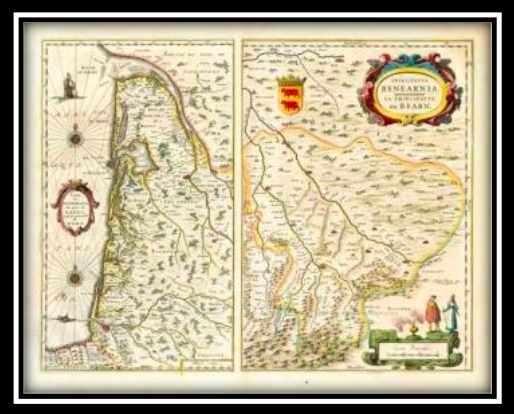
The Médoc before the seventeenth century was a marshy territory, but the Dutch engineers, called in by King Henry IV in 1599 and the large landowners to drain the land, made it possible to clear new vineyard land of gravel outcrops, and gravel deposited by the Gironde. These poor soils, very draining and warmed by pebbles, required a late-budding grape variety, which needed heat to ripen and which required a late harvest, often in October, in order to guarantee great maturity while preserving its acidity. But its triumph was followed by a sudden fall, because powdery mildew, a fungus from America, which attacked the vineyards in the 1850s. Then phylloxera, a tiny aphid that destroyed the roots and killed the vines, appeared in France in 1863. And then around 1878 the mildew, still American, which caused the Bordeaux vineyards and particularly Cabernet Sauvignon to be ravaged. Even if treatments were found in 1882 to fight these diseases, and the replanting on American rootstock to eradicate phylloxera around 1870, this did not stop winemakers from choosing other grape varieties that were less capricious to graft and more productive than Cabernet Sauvignon, which quickly lost ground in its development as the grape variety of the princes and kings of Bordeaux.
Verse 59.1.03: The Napoleon of the vines
This Cabernet Sauvignon with its small berries, with thick skin, concentrates colour, with its tannins and aromas of blackcurrant and cedar, but which when ripeness is lacking, develops aromas of green pepper (methoxypyrazines), explains its ability by its late harvest to produce fine wines for great ageing. The great owners of the eighteenth and early nineteenth centuries, who were above all merchants, understood this well, and the influence of the British market in Bordeaux favoured wines that could be exported while preserving their qualities and longevity. It was Hector de Brane, who was nicknamed the "Napoleon of the vines", who made it the pillar of his estate of Mouton in the 1820s, but it was the desire of Napoleon III to regain control of Bordeaux wines, which with the 1855 classification established for the Universal Exhibition in Paris, consecrated this success that propelled Cabernet Sauvignon as the grape variety of the greatest and most prestigious wine references in the world.
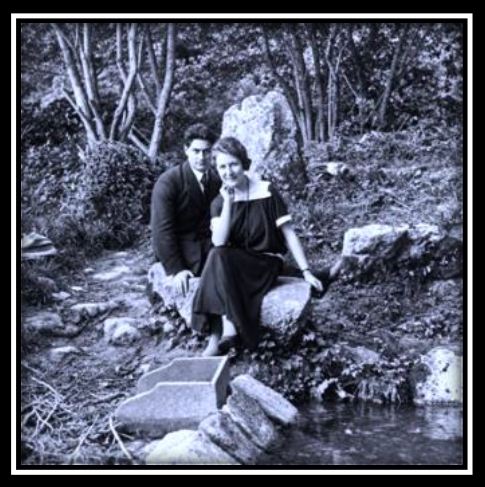
In the twentieth century, Bordeaux viticulture experienced wars, economic crises and the devastating frost in 1956 which gave Merlot a preferential position. But the left bank continued to believe in the potential of Cabernet Sauvignon and continued to be planted for the blending of its wines in addition to Cabernet Franc, Merlot, Malbec, and Petit Verdot. Even if it was in the nineteenth century that Europeans took their grape varieties in their luggage to California, it was pioneers such as Charles Wetmore, Gustave Niebaum and others who planted and developed the first Bordeaux grape varieties in the Napa Valley. But surprisingly, it was the consequences of Prohibition (1920-1933) that made it famous and revealed to the world in the aftermath of the repeal.
CHAPTER 2.0
Verse 59.2.01: The start of a great monetary and power adventureThe majority of fine wines exported to the American continent before and during Prohibition were Bordeaux, an image of luxury, prestige, and refinement. So as soon as it was repealed at the end of 1933, California chose to focus on the production of fine wines of the same quality as Bordeaux wines and on blends of identical grape varieties. In 1861, Charles Krug founded one of the first large wineries in Napa, in the St. Helena region, which laid the foundations for commercial viticulture. Then Gustave Niebaum created Inglenook in 1879, where he planted Bordeaux grape varieties and openly aimed for French excellence, where he is often cited as the first to build a great reputation for Cabernet in Napa. But it was Georges de Latour, a Frenchman who arrived in California, who founded Beaulieu Vineyard in 1900, who during Prohibition obtained the right to supply mass wine, which saved his estate, hired André Tchelistcheff, a Russian oenologist, in 1938 to modernize the methods, which would lay the foundations for the revival of the modernity of Napa Valley wines.
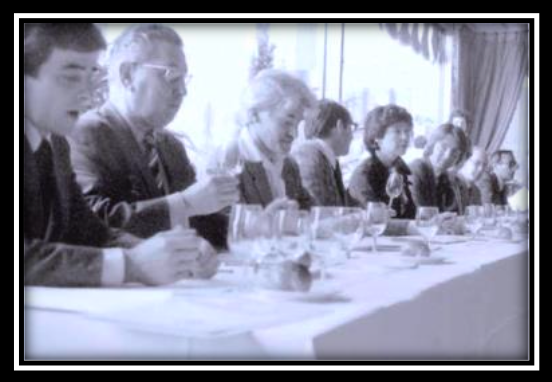
On May 24, 1976, in Paris, the British wine merchant Steven Spurrier organized a blind tasting with high-level French jurors. He pitted California wines against Bordeaux and Burgundies. Among the reds, it was the 1973 Stag's Leap Wine Cellars, a Cabernet Sauvignon from Napa, that came out on top ahead of great Bordeaux wines such as Mouton-Rothschild, Haut-Brion, Montrose or Léoville-Las Cases, and it was the only journalist present, George Taber of Time magazine, who reported on the affair that quickly went around the world, establishing the reputation of American Cabernet. Even if this episode does not prove that Napa surpasses Bordeaux, it will help to break a very old taboo by confirming that France no longer has the monopoly of excellence alone.
Verse 59.2.03: The Golden Age of the “New World”
In the wake of 1976, Napa exploded, and Robert Mondavi founded his estate in 1966 and joined forces with Baron Philippe de Rothschild in 1979 to create Opus One. In 1966, Heitz launched the first wine from a vine named Martha's Vineyard. Then came the cult Cabernets, led by Screaming Eagle from 1992, sold at unaffordable prices.
Everywhere, the grape variety became a standard. In Italy, the "Super Tuscans" such as Sassicaia (1966), Tignanello and Solaia blended Cabernet and Sangiovese outside the appellations. In Spain, the Torres house surprised in 1979 by placing its 1970 Mas La Plana ahead of Latour 1970 in a tasting organized by Gault & Millau. In Chile, French and Chilean houses joined forces, for example Concha y Toro and Mouton for Almaviva. The Bulgarian Cabernet, mass-produced during the Soviet era, flooded British shelves in the 1980s. Margaret River, in Western Australia, and South Africa developed their own styles. Then the American critic Robert Parker, whose scores out of 100 made or broke reputations from the 1980s onwards, accompanied this movement. His taste for concentrated, alcoholic, rich, and woody wines guides practices, to the point that some (including myself) evoke a "parkerization" of styles.
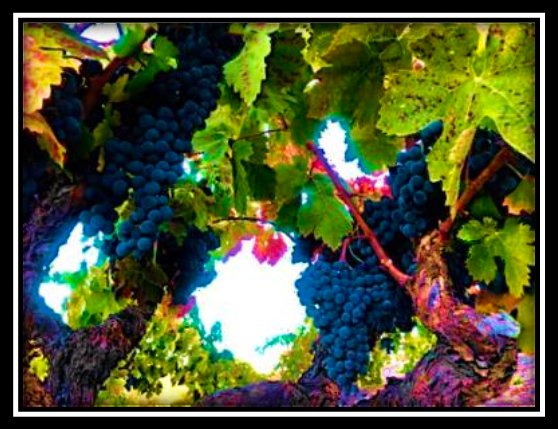
Clones of Cabernet Sauvignon from a mother stock differ in berry size, yield, earliness and style of wines, but the differences remain nuanced. 337 is the most famous French clone, it gives small berries, a deep color and generous fruit, with fine tannins. 169 forms small, tight, thick-skinned bunches, produces dark wines, with firmer tannins, which flourish when aged, and is one of the most planted clones in France. 338 is described as concentrated, with marked tannins. 341 is cited among the recent Bordeaux plantations that are more resistant to recent climate change. As for the specifically Californian clones, 7 and 8 are the most widespread. 7 gives medium berries and a clear tannic structure, and both have long been the reference clones of the region. Clone 4, known as "Mendoza", brings more structure, and clone 6 is reputed to be austere and more herbaceous, close to the classic style. Clones 33 and 34, sanitized versions of 191, ripen early and thrive especially on sandy soils. So to simplify we can say that clones 337, 338 and 169 give rather juicy wines, while clones 4, 15 and 6 bring more tannins and rigor, and in general Californian estates therefore blend several clones to gain in complexity.
CHAPTER 3.0
Verse 59.3.01: The unpredictable prediction of an unannounced big fallIf, since the early 2000s, the grape variety has faced new challenges, with harvests taking place earlier than in the past, alcohol levels rising and acidities decreasing, the situation becomes even more delicate in the hot regions. Cabernet Sauvignon sometimes comes dangerously close to over-ripeness, requiring earlier harvests that can, conversely, accentuate the presence of very distinctive notes of methoxypyrazines and exaggerated tannins. These imbalances have led to an increasing intervention of winemaking techniques, as well as the use of products and oenological corrections intended to modify the aromatic profiles and preserve the "commerciality" of the wines. The consequences of these styles, added to the arrival of a new generation of consumers, mainly millennials, demanding "anti-Parker" wines, more modern, more authentic, less manipulated, more traceable, and above all eager to challenge the "blind" consumer culture of their parents, will contribute to the unexpected fall of a hitherto flourishing trade, that of Cabernet Sauvignon in the world.
But one thing is certain: after more than three centuries of history, Cabernet Sauvignon has certainly not finished making a name for itself. Because its real strength has always been to know how to be adopted without completely distorting itself, from the Gironde gravel to the slopes of the Napa Valley, from the Andes to the confines of Ningxia.
Verse 59.3.02: Media, Media, Media: Long live “dad's” wines
The impact and considerable financial consequences of its decline on vineyards sometimes belonging to the wealthy 500, institutional investors and multimillionaires could now allow it, to the tune of millions, if not billions of dollars in communication, marketing and media influence, to once again become the desired prince of tomorrow's consumers and, at the same time, to restore the image of owners in search of prestige. In recent weeks, and even for several months, a veritable wave of journalistic articles, wine critics' columns and promotional images has been multiplying around this fallen king. Journalists who, only yesterday, praised natural wines, marginal grape varieties and unconventional productions, are now beginning, almost coincidentally and almost all at the same time, to declare their love for Cabernet Sauvignon. Eric Asimov, for example, recently published his article "Standing Up for Cabernet Sauvignon" in the New York Times, while Mike DeSimone and Jeff Jenssen wrote a long article for Robb Report's Food & Drink/Wine section entitled "Why Winemakers Are Embracing Single-Clone Cabernet Sauvignons". The angle chosen in these two cases is particularly interesting because it consists of separating the grape variety from the traditional image of the big brands and estates in order to attract a new generation of consumers who still too often associate Cabernet Sauvignon with heavy, expensive and outdated wines, but also to separate themselves from the old names mainly recognized by the Baby Boomer and X generations.

The strategic choice is therefore to give Cabernet Sauvignon a youthful air by attributing to it precisely the codes that we associate today with the contemporary wine movement, those of mono-clonal cultures, exotic or little-known regions, highlighting the name of the vineyard on the label, identified plots, limited productions, the search for identity and the desire to express a particular style or character. On the critics' side, the same phenomenon appears. Winemakers and producers who were previously presented as outsiders are suddenly brought back to the fore, who resurface in the new narrative of Cabernet Sauvignon: Steven and Jill Matthiasson, Arnot-Roberts, Christophe Baron, Bob and Louisa Lindquist, Jesse Giacomelli, Hal Iverson and Jesse Schmidt, Peter Devison, Justin Neufeld, Jack Sporer, Jay Nüñez, Matt Ahern & Andrew and Adam Mariani, and many others. Everyone is getting into it, because the historic generation of Cabernet Sauvignon is aging, while younger consumers sometimes barely know this grape variety apart from its caricatures. It then becomes, when not offered at an exorbitant price, one of the best ways to bring tomorrow's consumers back to the big names, the great terroirs and, perhaps later, to the mechanisms of prestige, rarity and speculation that have made Cabernet Sauvignon economic power for decades.
Verse 59.3.03 But what is the taste and aromas of Cabernet Sauvignon?
Cabernet Sauvignon has a fairly recognizable aromatic profile, but its taste and especially its structure can change a lot depending on the climate, terroir and soils. And it is important to recognize that a Cabernet Sauvignon from a warm climate can have a lot of body but less acidity, while a Cabernet from a cool climate can be less massive but have more freshness, tannins and notes of blackcurrant, mint or pepper. So here are two graphs that will allow you to better understand your purchasing choices. (Note that even if winemaking decisions depend on the climates and soils, winemakers can for many reasons intervene in the character of the original wine)
Cabernet Sauvignon: Influence of Climate
| Element | Cool climate | Moderate climate | Warm climate |
|---|---|---|---|
| Fruits | Redcurrant, cherry, fresh blackcurrant | Blackcurrant, blackberry, plum | Very ripe blackberry, black plum, stewed black fruit |
| Vegetal notes | Green pepper, blackcurrant leaf, herbs | Mint, blackcurrant leaf, discreet vegetal | Low or absent if fully mature |
| Spices | Pepper, dried herbs | Black pepper, liquorice, cedar | Licorice, cocoa, sweet spices |
| Acidity | Elevated, lively | Balanced | Lower |
| Tannins | Firm, sometimes angular | Structured, ripe | Rich, broad, more supple if ripe |
| Body | Medium to full-bodied | Full-bodied | Very full-bodied |
| Alcohol | Moderate | Moderate to High | High |
| Overall style | Fresh, vegetal, tense | Balanced, structured, classic | Rich, powerful, ripe |
| Key Risk | Under ripeness, marked methoxypyrazines | Good balance of maturity and freshness | Over ripeness, high alcohol, loss of acidity |
Cabernet Sauvignon: Influence of the Soils
| Soil / terroir | Effect on the vine | Possible expression of Cabernet Sauvignon |
|---|---|---|
| Gravel / gravel | Excellent drainage, soils that warm up quickly | Concentration, structure, steady ripeness, elegance |
| Clay | High water retention, often higher vigor | Body, power, substance, high tannins |
| Limestone | Good water regulation, drainage + deep reserve | Freshness, acidity, tension, finer tannins |
| Sand | Fast drainage, low water retention, limited vigor | Suppleness, finesse, lighter body, less solid tannins |
| Volcanic | Highly variable depending on depth and composition | Freshness, tension, singular aromatic expression |
| Poor/stony soil | Limitation of vigour, low yields | Concentration, more present tannins, intensity |
| Deep/fertile soil | Stronger vigor, regular water supply | Fuller fruit, sometimes less concentration |
Conclusion
So be in the wind, modern and curious. Rediscover this grape variety that we sometimes think we know too well, because Cabernet Sauvignon is not just about its power, its tannins, or the fixed image of the great prestige wines with which it is too often associated, or those bombs of Napa. It’s true expression depends above all on the art of the winemaker, because it is built in a succession of precise choices through the selection of clones, diversity of the plots, age of the vines, exposure, desired maturity, extraction, ageing, choice of coopers, proportion of new or old wood, duration of ageing and, of course, blending. And even when it is presented as the main grape variety, Cabernet Sauvignon has always been in dialogue with other varieties. Cabernet Franc can bring freshness, fragrance and finesse; Merlot, roundness and flesh; Petit Verdot, color, spices and structure; Malbec, fruit, depth and suppleness, not to mention that other more marginal grape varieties can still contribute to this balance depending on the region, the traditions and the winemaker's vision. This is precisely where its interest lies, because this grape variety is not a fixed wine, but an extraordinarily malleable raw material. Depending on the climate, the soil, the vintage and especially the hand that guides it, it can become austere or sensual, classic or contemporary, powerful or elegant. So, forget for a moment what you think you already know, and take the time to taste it differently, compare climates, soils, ageing and blends, because behind the same grape variety name can hide dozens of interpretations. And this is perhaps where the true modernity and renewal of this forgotten diamond begins, not by rejecting it, but by learning to rediscover it.
Mr. B
*Memorandum:
My words and opinions in these newsletters are and would always be personal, and I intend to offend.
I always accept that others have the full right and duty to challenge me, to argue, and, if it is necessary, excommunicate me from their beliefs (often dull and hollow) because I would act the same way if it were the other way around.
Powered by Lightspeed
Display prices in:USD
