HOURS: TUESDAY - SATURDAY 12-9PM // CLOSED SUNDAYS & MONDAYS
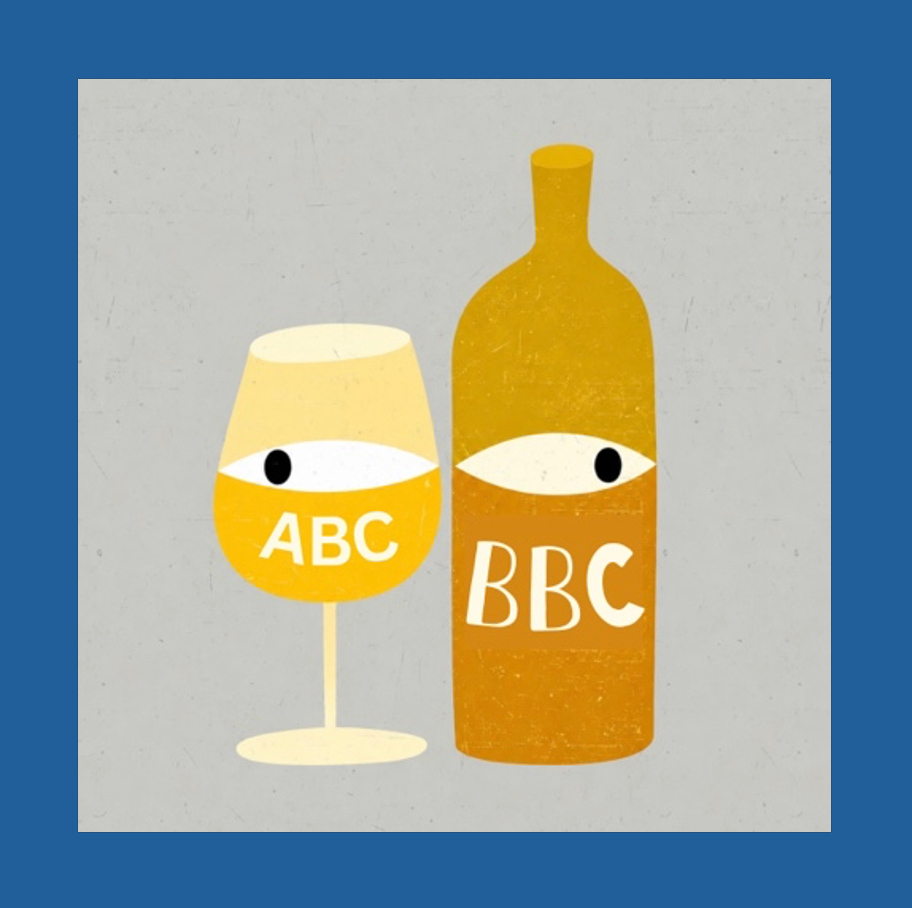
Vol. 60 - “ABC or BBC”
Harvard Square
Zero-Two-Wine-Three-Eight
The most opinionated wine Newsletter in America
“ABC or BBC”
That is the question!
Read the PDF-formatted version here
WARNING: This text contains a word 58 times that might offend some people,
to the point of wanting to damn and condemn it. Sensitive souls, stay away!
Book of Bertil # 60
Introduction
Here is a very real question, voiced in Hamlet, Act III, Scene 1 (circa 1600), by William Shakespeare: “To be, or not to be, that is the question!” This famous line, taken up in my reflection on the purity and impurity of words, could then be reinterpreted this way: “To be impure or not to be impure may not be the real question. The real question is whether impurity lies in the words we speak or in the intentions we hide behind them.” For, in the end, it is not always the person who uses the coarsest words who has the most impure mind, nor the person who uses the most elegant words who has the most virtuous soul. As the apostle Paul writes in Ephesians 4:29: “Let no corrupt communication proceed out of your mouth, but that which is good to the use of edifying, that it may minister grace unto the hearers.” That is why I stand before you today to plead a cause that is particularly dear to my heart, addressing myself especially to the post-X generations. For the word “Chardonnay,” so long decried, judged, condemned, even damned, has today repented of its past sins. It humbly asks you to absolve it, to forgive its past excesses and, at last, to grant it a second chance. Not for what it was, but for what it is: a grape with noble intentions, which asks only to be rediscovered, understood and, above all, loved again by all.
CHAPTER 1.0
My Plea
Verse 60.1.01: Its history
60.1.01: The OriginThe name is thought to come from the village of Chardonnay, near Tournus, in Saône-et-Loire (the Mâconnais). Its etymology is said to go back to the Latin cardonnacum, “place where thistles grow.” The grape was born of a natural cross between Pinot Noir and Gouais Blanc, a medieval grape that has all but disappeared. It then developed thanks to the monks of Cluny and Cîteaux, who selected and planted the best plots. From the Middle Ages on, Burgundy established it in Chablis, in the Côte de Beaune (Meursault, Puligny-Montrachet, Corton-Charlemagne) and in the Mâconnais. For a long time, it was confused with Pinot Blanc*, which made it difficult to trace its earliest mentions precisely, because ampelographers only clearly distinguished it in the nineteenth and early twentieth centuries.
*Only since 1999, thanks to DNA analyses carried out by French and American researchers (the teams of Carole Meredith at UC Davis and Jean-Michel Boursiquot), has the true parentage of Chardonnay been known.
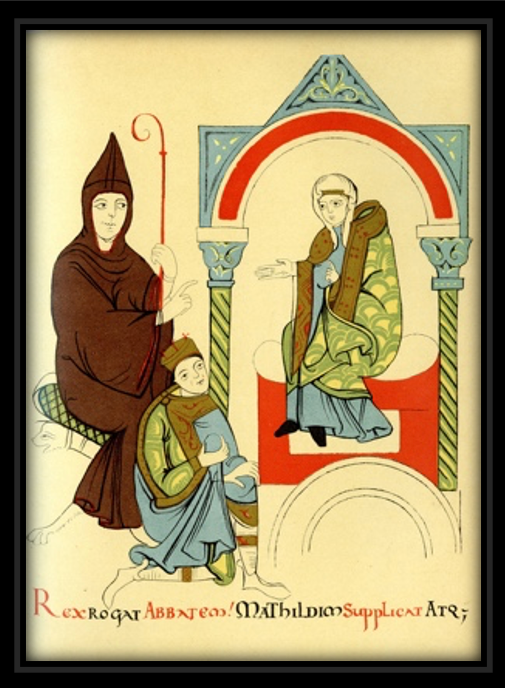
The Church: Its Faith in Chardonnay
The Roman Catholic Church played a central role in the rise and recognition of Chardonnay, especially in Burgundy, its cradle. From the early Middle Ages, the Benedictine abbeys (Cluny), then the Cistercian ones (Cîteaux, founded in 1098), cleared, planted and studied the plots of Burgundy, where the monks observed how each plot yielded a different wine. This is the origin of the notion of “climat” and of terroir**, still at the heart of the Burgundian
Why Chardonnay?
The monks favored quality white and red wines, for Mass as well as for gifts and relations with the powerful. These wines are indispensable to the Eucharist; these grapes therefore guaranteed the Church a steady production and pushed it to care about quality. Thus the abbey of Cîteaux, founded in 1098 by Robert of Molesme, set out to return to the Rule of Saint Benedict, more austere than that of Cluny, in which manual labor, of which the vine is a part, holds a central place. It acquired plots through gifts and exchanges, enclosed them with walls (the “clos”) and compared the wines plot by plot over several generations. Thus the Clos de Vougeot, built from the twelfth century and walled around 1336, covers about 50 hectares, in which the Clos Blanc de Vougeot, for Chardonnay whites, is a small plot that was assigned to the monks. For a tradition holds that the monks distinguished three cuvées according to the slope: for kings, for popes and for monks. As for Corton-Charlemagne, one of the most prestigious Chardonnay white wines in the world, the story goes that King Charlemagne gave vines at Corton to the collegiate church of Saulieu in 775 and that his wife had him plant white grapes because red wine stained his beard. As for Chablis, where the grape is called “beaunois,” the monks of Pontigny Abbey, founded in 1114 as the second “daughter” of Cîteaux, developed the vine there from the twelfth century and made Chablis a renowned wine, carried down the Yonne to Paris.
Verse 60.1.02: From the Hospices de Beaune in 1443 to the French Revolution of 1789At the Hospices de Beaune, Chardonnay took centuries to earn its glass: an inquiry into a reputation built slowly, in the shadow of Pinot Noir. A plea always begins with a confession: for the period that concerns us, the evidence is lacking, because no solid source describes a Chardonnay production specific to the Hospices de Beaune between 1443 and 1789. It is better to say so from the outset. But this silence of the archives already tells us something: the story of a grape that did not yet have its name of glory and that made its way discreetly before conquering the glasses.
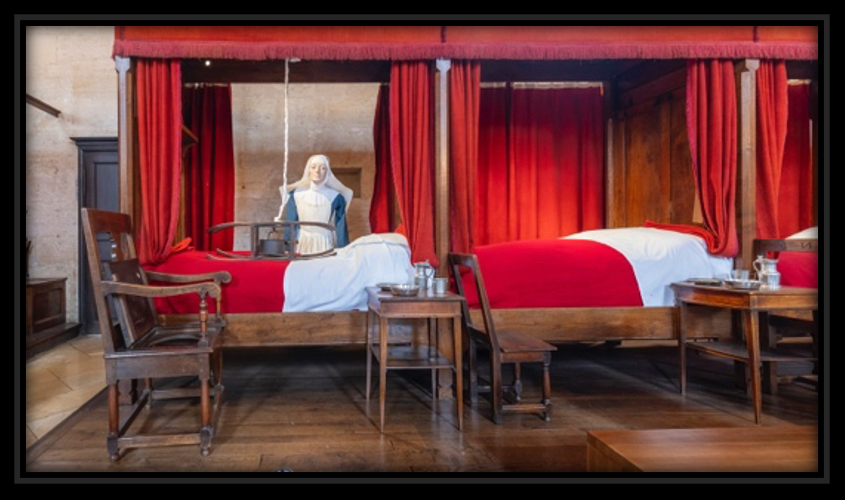
The Hospices:
In 1443, Nicolas Rolin, chancellor of the Duke of Burgundy Philip the Good, and his wife Guigone de Salins founded the Hôtel-Dieu de Beaune to care for the poor, in a region drained by the end of the Hundred Years’ War. The first revenues came from annuities and land; the vines came afterward, through donations and bequests from burghers and notables, and gradually became the hospital’s lifeblood. In the fifteenth, sixteenth and seventeenth centuries, the Côte de Beaune was first of all the kingdom of Pinot Noir, which the dukes of Burgundy had favored since the fourteenth century over Gamay**. If Chardonnay prospers in the Côte de Beaune, the Hospices merely benefit from that heritage without being its author, while the reputation of the Côte’s whites is built slowly. It was only in the seventeenth and eighteenth centuries that Meursault and Montrachet earned their stripes, and in 1787 Thomas Jefferson, passing through Burgundy, considered Montrachet the best white of the region. Then the French Revolution of 1789 confiscated the property of the clergy and dispersed the monastic estates, which prepared the present fragmentation of Burgundy; the Hospices, for their part, weathered the storm almost intact. This hospital institution, run by sisters and serving the population, was not dissolved: it kept most of its holdings and continued each year to speculate on the value of the Chardonnay clos. The white cuvées that make its reputation today, Meursault-Genevrières, Meursault-Charmes and Corton-Charlemagne, come mostly from donations of the nineteenth and twentieth centuries, and the charity wine auction, established in 1859, gives them the stage they deserve.
CHAPTER 2.0
Chardonnay Styles “Before and After American Prohibition”
The Chardonnay grape is an almost neutral canvas, offering few aromas of its own, but it faithfully records the place where it grows: the rock, the exposure, the coolness of the nights, the vintage. The monks of Cluny and Cîteaux understood this by comparing plots one by one over centuries, and they fixed the differences that still today form the signature of appellations, crus and clos.
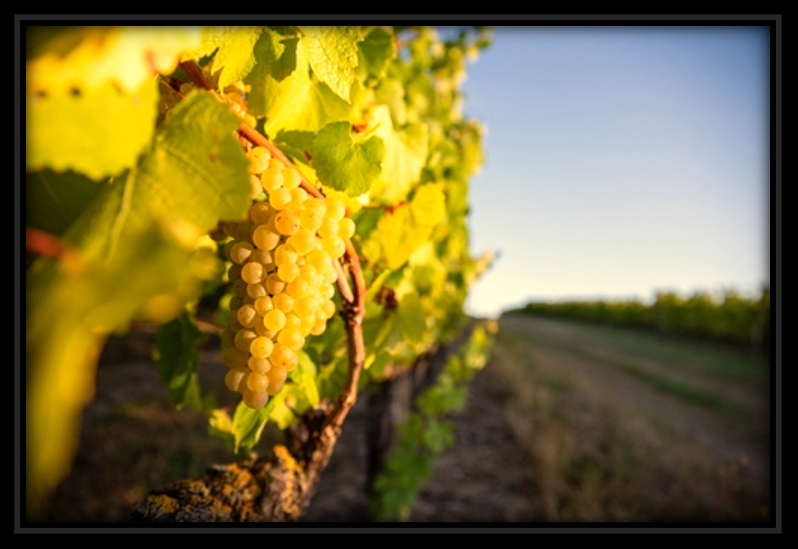
The northern vineyard rests on Kimmeridgian soils, a mixture of limestone and marl rich in oyster fossils, under a cool, chilly climate threatened by spring frost. The Chardonnay wine (only Chardonnay) is lively, saline and mineral, with notes of citrus and green apple. It is often aged in stainless steel tanks, concrete tanks or old barrels, to preserve this taut line. The grands crus, grouped on a single hill, show more depth without losing this straightness.
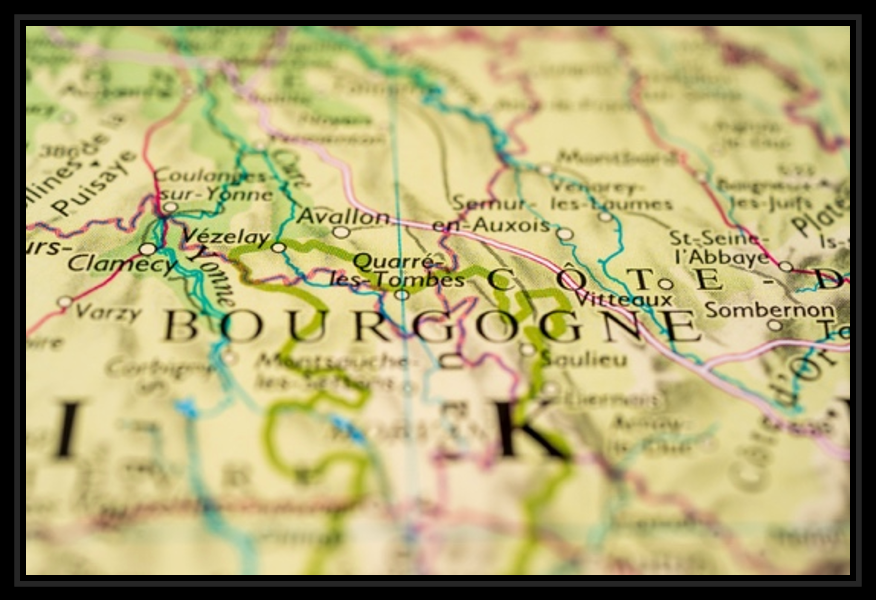
The Côte d’Or Down to Santenay
From north to south along the Côte d’Or, over 60 kilometers, Chardonnay seeks its voice in the stone. First we must restore a fact that is often forgotten: the Côte d’Or is a red kingdom. In the north, the Côte de Nuits belongs to Pinot Noir, on lean, stony soils of limestone and marl. Chardonnay is only an exception there, sometimes inherited from the monks of Cîteaux. At the gates of Dijon, Marsannay and Fixin offer fresh, nervy whites, proof that Chardonnay can be drawn from limestone in a cooler climate. Farther south, Morey-Saint-Denis keeps the trace of its precise, saline whites, and Chambolle-Musigny holds an absolute rarity: the white Musigny, just a few rows, a wine that is more floral, of extreme finesse and great complexity. Vougeot and a few whites from Nuits-Saint-Georges complete a picture in which tension and restraint are the rule, without the breadth of the south. Then the hill of Corton marks the hinge. On its white marls and limestone, Chardonnay finds one of its greatest terroirs: Corton-Charlemagne, straddling Aloxe-Corton, Pernand-Vergelesses and Ladoix, is a powerful wine, austere in its youth, very mineral, which needs years to open, and which is undoubtedly one of the most prestigious white wines in the world. Pernand-Vergelesses, more affordable, offers a taut, saline version, while Savigny-lès-Beaune and Beaune offer softer whites, where premiers crus such as Clos des Mouches seek a balance between roundness and freshness.
It is in the south of the Côte de Beaune that the grape reaches its heart.
There, the clay-limestone soils, the well-exposed slopes and barrel aging shape the great styles. Meursault is the generous white par excellence: it expresses roundness, with notes of hazelnut, butter and honey, and an often-oxidative aging that is part of its signature. A few kilometers away, Puligny-Montrachet changes register, with more precision, tension and minerality, as premiers crus such as Pucelles, Combettes or Folatières illustrate well; then Chassagne-Montrachet settles between the two, fuller-bodied and spicier. Finally, at the summit, the grands crus of Montrachet, Chevalier-Montrachet, Bâtard-Montrachet and Bienvenues-Bâtard-Montrachet combine opulence and elegance. The Chevalier is finer and more taut, the Bâtard richer. Around them, Saint-Aubin offers whites of gunflint and citrus, highly sought after for their value, while Auxey-Duresses and Saint-Romain, on the heights, yield fresher, livelier wines. Santenay and Maranges, mostly red, offer only a few simpler whites. The picture drawn by this descent to the south is that of a single grape changing its face with every hill: nervy tension in the north, mineral power at Corton, golden breadth at Meursault, precision at Puligny. The monks observed this diversity and fixed it through their clos, and it still forms the signature of their reputations today.
Chardonnay in America
Verse 60.3.01: From California’s Pioneers to the Return of FreshnessFrom a vine cutting imported in the nineteenth century to the most drunk wine in the country in the 1990s, American Chardonnay has gone through, in less than two centuries, a complete cycle: from oblivion to triumph, then to excess, and finally to a great questioning.
Early Days: A Discreet Arrival
The first Chardonnay vines in California were planted by Charles Wetmore, in Livermore, who brought cuttings from France in the 1880s, but the exact source of those cuttings remains debated. The Wente selection is then more often cited, derived from cuttings obtained around 1912 through the University of California, which would become the basis of a large part of the American vineyard. For decades, however, Chardonnay remained a curiosity, because at that time the choices leaned instead toward high-yielding grapes and abundance. Then Prohibition ruined the industry: many estates closed, vines were pulled up or converted, and only a reduced activity survived. After repeal in 1933, reconstruction was slow, the market was dominated by sweet or fortified wines, and Chardonnay stayed on the margins until the 1960s.
Verse 60.3.02: The 1950s–1960s: The ForerunnersA few enthusiasts kept the flame alive, such as Stony Hill, in Napa, which produced Chardonnays from 1952, restrained and fresh, or Hanzel Vineyards, in Sonoma, among the first to age Chardonnay in French oak barrels. Then, in 1966, Robert Mondavi founded his winery in Napa, with the ambition of rivaling Europe. Even so, the acreage planted to Chardonnay remained tiny, until everything shifted in 1976 at the Judgment of Paris**: Chardonnay had just received the prize of its glory. On May 24, 1976, in Paris, the Château Montelena 1973, a Chardonnay from Napa, beat great white Burgundies in a blind tasting. California emerged from anonymity, and American Chardonnay became the grape of recognition. Plantings exploded, new estates were born, such as Chalone, Freemark Abbey and Mayacamas, and Chardonnay became a social phenomenon. But this is the United States, where the rules are set in excess, opulence and financial success. Here everything is thought big, and volume comes well before finesse.

This success coincided with the great industrial revolution of viticulture, with the explosion in the manufacture of very large stainless-steel tanks, of more than 10,000 hl (2,642 gallons), often comparable in size to large grain silos. Added to this were the development of very large farming operations, requiring the use of industrial machinery, and the intensive use of new chemical products (pesticides, fungicides, herbicides, chemical fertilizers) and industrial yeasts, in order to cut labor costs to the minimum, raise the quantity of grapes produced per hectare to the maximum and keep the selling price as low as possible (at the time, between $3 and $8 a bottle). The result: wines masked under wood, in particular under American oak (in chips). Moreover, these wines were produced in very hot climates and often on deep clay soils; the dominant style was then opulent, with very ripe grapes, abundant new oak, a malolactic fermentation that gives a buttery texture, and sometimes a little residual sugar. Kendall-Jackson, whose Vintner’s Reserve cuvée, at $4.50, met with immense popular success from the 1980s, embodies this accessible, generous Chardonnay. Chardonnay became the most consumed white wine in the country, a symbol of social success. But saturation came quickly. These overly oaked, overly heavy, overly sweet, overly uniform wines wearied part of the public, and the slogan ABC, “Anything but Chardonnay,” was born, making the grape a scapegoat. The fault was not the grape’s, but that of a fashion that smothered it. So the real question is whether “impurity lies in the word we speak, ‘Chardonnay,’ or in the intentions we have hidden behind it.”
A new generation of American winemakers, lovers of Burgundian Chardonnay wines, decided to answer the Chardonnay of excess with a Chardonnay of place. These young winemakers of the next generation seek freshness on the Sonoma Coast, in Anderson Valley, in the Santa Cruz Mountains or in Sta. Rita Hills, with earlier harvests, less new oak and less pronounced fermentations. Names such as Kistler, Rhys, Littorai, Ceritas, Arnot-Roberts, Steve Matthiasson and Sandhi illustrate this movement, often inspired by Chablis and Puligny. Some also bet on unoaked cuvées. This renewal also extends to other regions beyond California: in Oregon, with wines of great freshness; in Washington State, where the continental climate of the Columbia Valley yields frank, high-acid Chardonnays; and in New York State, where Chardonnay from the Finger Lakes yields wines of great straightness and great tension.
Closing Argument for Chardonnay
Ladies and gentlemen of the jury,
Generations Y and Z do not want to drink what their parents drank. They demand wines that do not lie: freshness, purity, knowledge of their origin, unflinching honesty. I have told you about the monks of Cîteaux, the clos of Burgundy, Meursault and Puligny. All of this is true, and I take back nothing, but this story could lead you to too simple a conclusion: to drink only French Chardonnay. I therefore ask you to let me prove the opposite, because it is our Chardonnays, those of America, that at last deserve to be revered by you and rediscovered.
Exhibit One: The Proof Is Fifty Years Old
On May 24, 1976, in Paris, French judges among the most respected tasted California Chardonnays and great white Burgundies blind. First in the ranking was a wine from Napa, the Château Montelena 1973, by Mike Grgich, ahead of bottles of Meursault, Beaune and Puligny-Montrachet. That was fifty years ago, this very year. Fifty years that we have known, and that France has known too, that an American Chardonnay can stand at the summit.
Exhibit Two: The Excess Was Committed, and AcknowledgedI will hide nothing from you: I must admit that the 1980s and 1990s produced Chardonnays that were too oaky, too heavy, too uniform. The slogan “Anything But Chardonnay” was born of our mistakes, and it was deserved. But one does not condemn a grape for what the market did to it.
Exhibit Three: The California That Changed CourseOn the Sonoma Coast, in Anderson Valley, in the Santa Cruz Mountains, in Sta. Rita Hills, winemakers harvest earlier, measure out the new oak, let fermentations run slowly. Kistler, Rhys, Littorai, Ceritas, Arnot-Roberts, Steve Matthiasson, Sandhi and many others have become benchmarks. They seek the tension of Chablis and the precision of Puligny, in our own soils.
Exhibit Four: Oregon, the Burgundy of the New WorldGo down the Willamette Valley. It lies at a latitude close to that of Burgundy, and its temperate summers, long autumns and volcanic soils (such as the Jory type) recall, in their logic, the slopes of Burgundy. David Lett, of Eyrie Vineyards, planted the grapes of Burgundy there as early as the 1960s, when everyone told him it was madness. In the 1980s, the arrival of the so-called “Dijon clones,” introduced notably thanks to David Adelsheim and Oregon State University, markedly improved the freshness and precision of the Chardonnays. Burgundy itself answered: the house of Drouhin, négociant and owner of great estates in Beaune, chose to plant in Oregon, in Dundee, with Domaine Drouhin Oregon, in the late 1980s. When a Burgundian family crosses the Atlantic to plant its grapes in our hills, it is not a fashion: it is a verdict. Producers such as Domaine Serene, Ponzi, Bergström or Brooks make taut, lemony, mineral Chardonnays there.
Exhibit Five: Washington, Light and the Cold of NightCross the Cascades. In the Columbia Valley, in the southeast of the state, summers are hot and dry, the days long, and above all the nights are cool, which preserves the acidity of the grape. The state’s latitude, close to that of Burgundy, gives very long summer days. Chateau Ste. Michelle has made Chardonnay one of its emblematic whites there, and smaller estates such as Woodward Canyon, L’Ecole No 41 or Buty seek a more precise Chardonnay, based on well-identified vineyards. Washington does not pretend to imitate Burgundy: it offers another voice, nervy, fruity, straight.=
Finally, head north to upstate New York. In 1951, a Ukrainian immigrant, Konstantin Frank, arrived there and maintained, against the opinion of the experts, that European grapes could survive these winters thanks to suitable rootstocks. He founded his winery in 1962. The deep lakes such as Seneca or Cayuga temper the climate and prolong the ripening of the grape. Finger Lakes Chardonnay is often leaner, more saline, closer to Chablis than to California. Dr. Konstantin Frank, Ravines, Red Newt or Heron Hill offer increasingly fine versions. Here is a Chardonnay that never had the slightest chance of being lazy.
Exhibit Seven: The Honesty You DemandDo you demand knowledge of origin? Our labels name the appellation, often the vineyard, the vintage, and more and more producers explain their practices. Do you demand a youth that looks to the future? Our winemakers are of a new generation, freed from classifications two centuries old. Do you demand the fair price? At comparable quality, our best Chardonnays often cost far less than the grands crus of Burgundy, which have become out of reach for most enthusiasts.

Conclusion
What I Ask of You
The excesses of “ABC” Chardonnay, as it took hold in the New World at the end of the twentieth century, with its overripe grapes and overwhelming oak, were a matter of fashion. Burgundian styles, by contrast, are a matter of place: the rock, the cold, the slope. Believe me: a Chardonnay that returns to its land recovers its voice, and perhaps that is how it deserves to be rehabilitated. I am not asking you to abandon Burgundy; I am asking only that you stop believing that merit ends at a border. From Napa to Oregon, from the Columbia Valley to the Finger Lakes, these are four climates, four soils, four voices, and one and the same grape that everywhere recovers its role as a mirror of place. Taste blind, judge on the evidence, and render your verdict. American Chardonnay has held on for fifty years. It only waits to be rediscovered. Condemn it if, and only if, you are convinced of its guilt to the point of retaining no reasonable doubt. Let me remind you that a reasonable doubt is not a fanciful or theoretical doubt: it is a doubt founded on reason and on evidence. If such a doubt remains, you must acquit it of its past sins.
I rest my case in your judgment, and Cheers… Oops!… Santé !
54 Church Street, Cambridge MA 02138
Powered by Lightspeed
Display prices in:USD
