HOURS: TUESDAY - SATURDAY 12-9PM // CLOSED SUNDAYS & MONDAYS
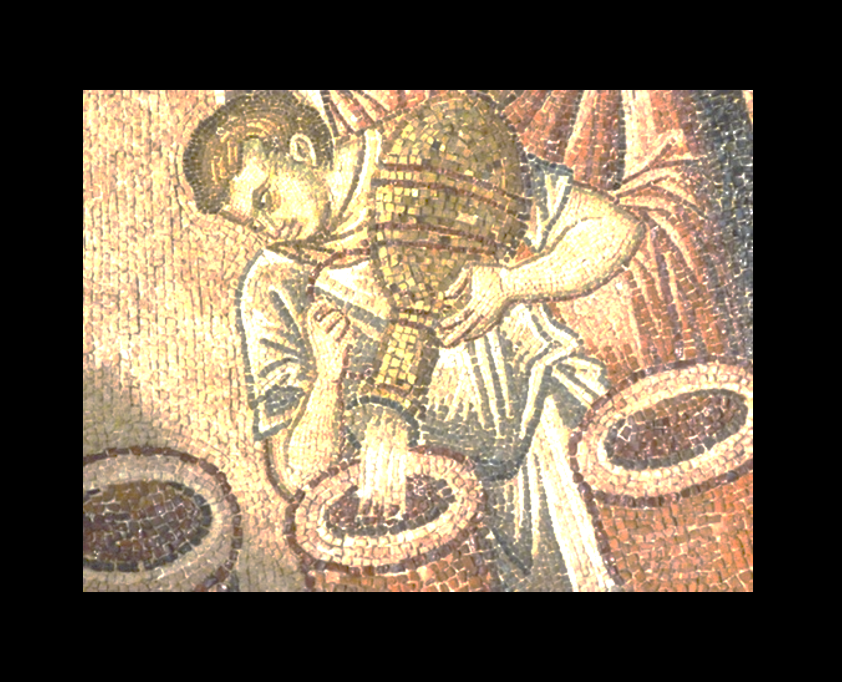
What the F…! When J changed the wine into water
Click here for the pdf version
What the F…!
When J changed the wine into water
Epistenoenological opinion
Introduction
This week, two very different circumstances led me toward an “epistenoenological” philosophical reflection. The first was a tasting event centered around the New England “natural-RAW wine” movement, and the second was an article in La Revue des Vins de France written by the remarkably talented Pascaline Lepeltier WMS, who refers in her article to Nicola Perullo’s philosophy “of wine as a relationship to the world,” rather than as an object of Cartesian tasting. This epistenoenology indeed proposes a radical shift in which the point is no longer to philosophize about wine, but to philosophize with wine. The “with” is essential because, for him, wine must exist “together, by means of, in relation with.” Thus, wine becomes a sensitive mediator that opens the door to another form of knowledge more embodied, more relational and it is precisely on this point that these two subjects fused, for me, into one single fundamental question: must wine become democratic, woke, and devoid of singularity?
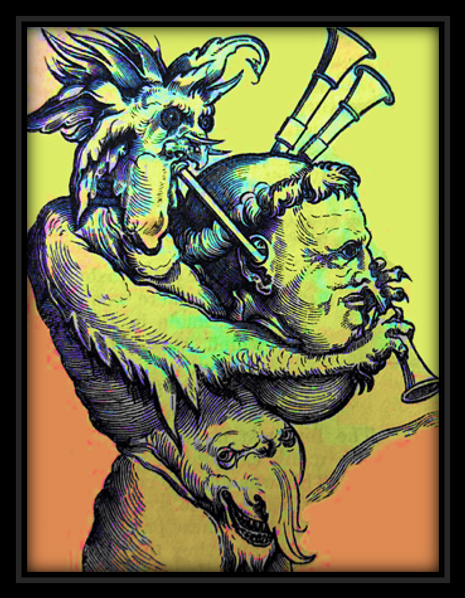
A Meta-Vinic Treatise
It is interesting to observe that wine adapts, much like fashion, by following the curve of the innovation diffusion cycle theorized by sociologist Everett Rogers in 1962. If, in 2000, the defining characteristics of natural wines were primarily their flaws, the movement remained associated, up to today, both in the collective imagination and among part of the professional world, with bottles marked by excessive volatility: brettanomyces, premature oxidation, reduction, or even mouse taint, glue, and nail polish aromas. These wines often claimed a form of freedom in opposition to corrective enology and industrial standardization. But, like all countercultural movements, that freedom naturally came with a degree of technical chaos. The great debate surrounding natural wine was therefore essentially a debate about microbiological cleanliness and the boundary between living identity and defect. Today, however, that debate has shifted, adapting no longer to offend previous generations, but rather to satisfy the expectations of the contemporary generation: Gen Z. The millennial generation has since settled into the conformity of near-middle age and has, by the same token, developed a more socially acceptable and less confrontational form of conformity.

In Vino Veritas
If defective natural wines are far less common today than they were five years ago, the movement has undeniably gained technical maturity without necessarily abandoning its original philosophy, even if there remains less intervention, more transparency, and a greater relationship to living ecosystems. Yet one astonishing conclusion must be acknowledged: natural wines no longer seem to have anything left to defend. They seek acceptability through a new aesthetic that has progressively imposed itself. Contemporary natural wine in 2026 has moved toward increasingly lighter profiles: lower alcohol levels, ultra-minimal extraction, softened and nearly absent tannins, fluid textures, gentle macerations, and an almost obsessive pursuit of drinkability, as though this had become the new holy grail of guaranteed success. Even the vocabulary itself has changed. We no longer speak only of terroir or structure, but of “glouglou,” energy, digestibility, or freshness.
Tantrums
This evolution responds to several phenomena: the rejection of over-concentrated wines, adaptation to climate change, transformations in eating habits, the global desire to be “healthy,” and a general decline in alcohol consumption. But above all, it reflects the erasure of any singularity that might prevent broad acceptability. Has wine become so woke that it no longer has anything left to express? Yet this new aesthetic is beginning to generate its own criticisms. Some enthusiasts and professionals believe that part of contemporary natural wine pushes the pursuit of lightness too far. Through increasingly early harvesting, reduced extraction, and the search for ever more fluid profiles, some wines ultimately lose density, depth, and at times even identity itself. The risk is therefore no longer flawed wine, but insubstantial wine: bottles that are technically clean yet thin, watery, lacking length and genuine presence. This evolution reveals a deeper tension within the recent history of natural wine. After fighting against the industrial standardization of the 1990s and 2000s, the movement may now be producing its own aesthetic norm. “Glouglou” itself is becoming a codified, recognizable, and reproducible style.
An Astonishing Observation
Even though I have always defended the idea that a winemaker should merely guide the transformation of a grape in the atypical expression of its origin its “Sense of Place” and for this reason my vision of wine is very similar to Nicola Perullo’s, I must once again acknowledge that these winemakers of the new Natural Wine movement demonstrate no real desire to simply embody that philosophy. Their true desires often appear narcissistic and financial, producing trendy wines and identity-less wines out of fear of rejection wines that have nothing to say and nothing to exchange. How, then, can one respect winemakers who claim to be non-interventionist artisans when the consumer is paying for an ideological posture while the quality in the glass becomes secondary, or frankly mediocre? The central issue is therefore that wine does not need a militant label to be ethical. If the packaging of these wines, over recent years, tells more of a political story than a “Sense of Place,” and if the vintage and grape variety are no longer identifiable, then these wines are just as false and usurpations as the manipulated wines denounced by the movement itself. These wines contradict the very basis of epistenoenological philosophy by annihilating “haptic” perception (from the Greek hapto, meaning “to touch). In opposition to a distant and purely visual understanding of the world, haptics defends an immersive perception in which the body, attention, and sensitivity play a central role. Tasting these wines is no longer an experience of resonance with an environment, a rhythm, a material, and the desire of an artisan to express matter through time and space. Instead, they have become neutralized, to please through apolitical neutrality. To me, these wines, which once had the capacity to disturb, shock, and militate under the banner of a new counterculture, have collapsed into “woke” and democratic conformity.
So let us make room for artisan wines what I define as “author wines”: wines that express a singular vision of the world, carried by a person, a place, and a sensitivity, rather than a standardized product responding solely to market expectations. Wines with an assumed subjectivity, produced by winemakers seeking not merely technical perfection, but personal expression — sometimes imperfect, yet sincere. A relationship to terroir, because wine is not interchangeable. It tells the story of a landscape, a climate, a culture, and a temporality. Wines of low standardization that are not designed to achieve high scores or seduce a globalized palate. Author wines must preserve a unique identity.
The Relational Dimension
Wine thus becomes an encounter between the one who produces it its author the one who transmits space, time, and the present moment, and the one who consumes it. A unique individual in their singularity, experiencing it through their own references and six senses. There are producers demonstrating that another balance remains possible through low-intervention, digestible, living wines capable of preserving substance, complexity, and expression of place. These are what I call “eco-responsible wines,” where the winemaker understands both place and respect within its own intrinsic “nature.”
Because beyond trends, the fundamental question always remains the same: does a wine possess a true presence?
Conclusion
Wine, like the sacred text, cannot truly exist if it becomes only the consensual reflection of its time. By dint of wanting to purify, simplify or democratize the experience, the risk is to erase what made its presence: the tension, the mystery, the irregularity, the irreducible singularity of a place, a gesture or a thought. A great wine is not only a technically irreproachable drink, just as a founding text is not only a discourse that must respond to contemporary sensibilities; Both carry an otherness capable of confronting man with something that is beyond him. In short, the question of the rewriting of the New Testament and that of the contemporary evolution of wine seem to reveal the same civilizational tension: that which opposes fidelity to the origin to the desire for permanent adaptation. For every era instinctively seeks to make the world more acceptable to its own sensibility, even if it means sometimes attenuating what disturbs, resists or escapes its moral and aesthetic codes. However, it is precisely in this resistance that the depth of life often lies. For when a culture no longer tolerates roughness, contradiction or discomfort, does it not inevitably end up producing perfectly acceptable works, beliefs and tastes? but profoundly without presence?
Amen
Powered by Lightspeed
Display prices in:USD
