HOURS: TUESDAY - SATURDAY 12-9PM // CLOSED SUNDAYS & MONDAYS
Vol. 56 - The Sense of Duty
Harvard Square
Zero-Two-Wine-Three-Eight
The most opinionated wine Newsletter in America
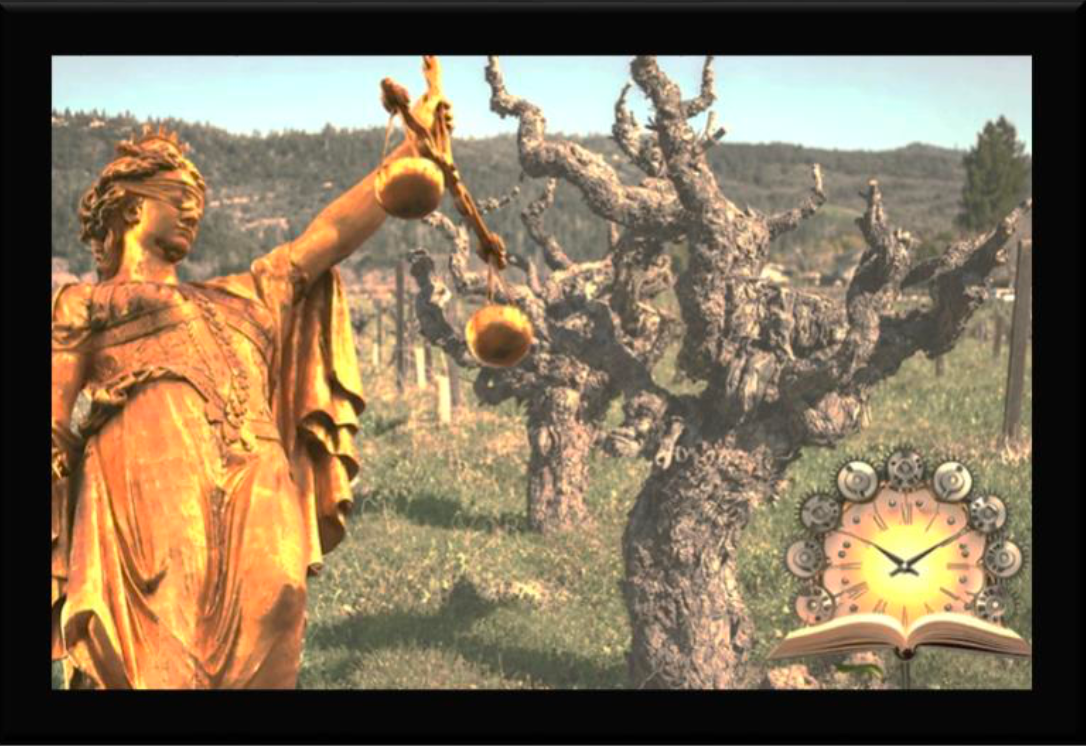
The "Sense of Duty"
35 years old Vines and Pierce's disease
Book of Bertil 56
Click here for the pdf-formatted version
Introduction:
After dedicating the last edition of the Bonde Fine Wine newsletter to the "Sense of Place" and the "Sense of Time", I promised myself to give you a summer break. I told myself that it was perhaps time to leave aside my thoughts on our seven senses, those of sight, hearing, smell, taste, and touch, but also the sense of intuition and the sense of others, to simply enjoy wine, without always trying to decode its multiple dimensions. But sometimes the news decides otherwise, because two readings this week convinced me that it would be irresponsible to remain silent. The first article was by Jancis Robinson and Alder Yarrow (author of Vinography) about the third anniversary of the Old Vine Registry. The second comes from Beyond Organic Wine (Substack) and raised a question that is as worrying as it is fundamental. Could Pierce's disease become the new phylloxera? These two texts, although dealing with different subjects, led me to converge on the same question: "How can we preserve the identity of wine when the winemaker shapes a false truth, and is there a sense of civic duty?" I then wondered how to share this reflection. Should it take the form of a short blog post: Drink Against the Current, or a Wine Not: The Screeds, in a whistleblower tone, or in the form of a 56th edition of 02wine38: America's most opinionated wine newsletter? So, as you can see as you continue reading, it is finally my sense of intuition that decided. I therefore offer you a summary of these two publications, accompanied by my own interpretation of what they reveal about the future of viticulture, about our collective responsibility, and about the place that must now be occupied by those who choose to sound the alarm. Because, in the end, it may all be a question of perception... until the day when reality forces us to change our outlook.
CHAPTER 1.0
Verse 56.01.01: The first article is by Jancis Robinson and Alder Yarrow:
The Old Vine Registry is taking the next step: why is its new seal so important?
Just three years after its creation, the Old Vine Registry (OVR) has become the world's largest database of old vineyards. Born in 2023 from a collaborative initiative led by Alder Yarrow, the registry now brings together more than 10,500 vineyards in 42 countries, exceeding its goal of 10,000 vineyards more than a year ahead of schedule. A real research tool, it documents the age of the vines, grape varieties, soils, viticultural practices and many other data that will allow a better understanding of the factors of resilience of vineyards in the face of climate challenges. But the most important announcement of this third year is undoubtedly the launch of the official seal of the Old Vine Registry. Why is this seal so important? Simply because there is no internationally recognized definition of what an "old vine" is. Depending on the country or the producer, this term can refer to vines that are 20, 35 or even 50 years old, and this lack of standards maintains great confusion and sometimes opens the door to purely marketing uses. So, the official avenue of this seal finally brings a credible global benchmark, because for a wine to be able to display it, at least 85% of the vines in the vineyard must be over 35 years old and their age must have been verified by the Old Vine Registry. This voluntary certification will strengthen transparency, protect consumers, and promote the work of the winegrowers who preserve this exceptional heritage. Beyond a simple guarantee of age, this seal is a reminder that old vines are living witnesses to our winemaking history, and even if they do not automatically guarantee a better wine, they embody a remarkable resilience, an irreplaceable genetic diversity and a cultural heritage that it has become essential to preserve. By finally giving a clear and verifiable identity to wines made from old vines, the Old Vine Registry is laying the foundations of a universal language that will promote their recognition, their protection... and their transmission to future generations.
Verse 56.01.02: The second article signed by Beyond Organic Wine:
Pierce's disease: the next turning point in viticulture?
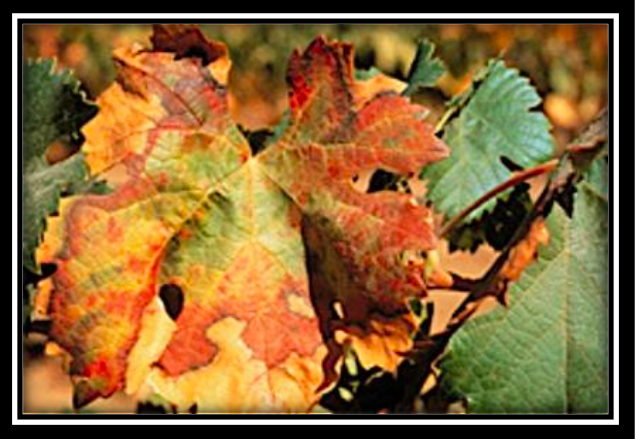
For the authors, Pierce's disease (Xylella fastidiosa) could represent for viticulture in the twenty-first century what phylloxera was in the nineteenth century: by destroying the American vineyard in the next few years, is a viticultural upheaval that will require a profound questioning of our plant material. According to them, the real problem is not the leafhopper (sharpshooter) that transmits the bacterium, because this insect is native to North America and has been part of its natural balance for millennia. The problem for them is therefore that Vitis vinifera, and specifically more fragile plants such as Chardonnay and Pinot Noir, are European vine grafts on which most of the world's production is based, has never developed a natural resistance to this disease. Unlike Phylloxera, this disease is a bacterial disease, and a disease spread by phytophagous insects, for which there is no total eradication solution. So, the authors in this article sound a warning to the authorities by explaining that rather than investing massively in insecticides, herbicides or other temporary solutions, that the only real sustainable response is to develop a new generation of rootstocks and resistant grape varieties. As phylloxera has led to the adoption of U.S. rootstocks, Pierce's disease could accelerate the use of naturally resistant U.S. species and stimulate genetic breeding programs. For them, the future of viticulture no longer lies in the protection of current grape varieties at all costs, but in their adaptation, and if the next wine revolution may not come from the cellar, but from the roots of the vine.
CHAPTER 2.0Verse 56.02.01: Important explanations to remain transparent:
To save the world's wine heritage, winemakers had to combine high-quality
European grape varieties with the resistant roots of American wild vines.
To fully understand this concept, it is important to know that 95% to 98% of the areas cultivated with wine grapes are planted on American rootstock, so this grafting has become the hegemonic standard of world viticulture. This absolute standardization on a global scale has its source in a major historical crisis, that of the devastating invasion of phylloxera, an aphid that came from North America in the nineteenth century. Beyond this essential health barrier, rootstock has also established itself as a precision agronomic tool. It allows the plant to be finely adapted to local climatic and geological constraints, regulating the absorption of specific minerals, soil acidity or drought resistance. So only a tiny minority of vineyards, representing barely 2% to 5% of the overall vat production, still escaped this standardization. These are so-called "Own-rooted vines". Own-rooted vines survive in geographical sanctuaries highly protected by natural barriers, such as Chile isolated by the Andes, or in the heart of terroirs with extreme physical characteristics; this is the case for sandy soils or volcanic ash, as is in such as some Oregon vineyards, which are naturally sterile environments for the dreaded parasite. But we must not delude ourselves, the death of these survivors is only a matter of time, since nothing can stop this destructive insect in its long progression. It is therefore understood that the grapes produced are the result of two different species of vines fused together, such as a Frankenstein whose head (Vitis vinifera) has been grafted onto a different body (rootstock or American rootstock). In addition, each winter, the winemaker will carry out a winter pruning "dormant pruning" for each vine, by reducing the size of the scion to one or two buds (less than two inches). This means that, each year, the grape will be produced by a new shoot that is less than nine months old. It is also not uncommon to graft new clone cuttings onto an old rootstock. So, my main question concerns the undeniable transparency of the age of the vines. Do we have to declare and certify the age of more than 35 years of the rootstock or scion?
Verse 56.02.02: The Meaning of Time
As unconditional as my admiration is for the outstanding work done by the Old Vine Registry community to record the age of vineyards around the world, and for Alder Yarrow's vision to bring greater clarity, transparency and integrity to the use of the "Old Vine" label, which is too often used by some unscrupulous producers by their own standards for purely commercial purposes; This does not prevent me from wondering what the market could, in turn, do with a certification label. Because if an official seal makes it possible to protect information, it can also, over time, become a powerful marketing tool, and the history of wine has taught us that any certification sooner or later ends up acquiring commercial value, sometimes to the detriment of the spirit that saw it born. This reflection takes on even more meaning when we note that the entire wine community now openly recognizes the need to adapt vineyards to climatic upheavals. Everywhere, producers are replanting their plots on new rootstocks, better adapted to droughts, emerging diseases and new environmental realities. This evolution is undoubtedly essential. But it raises a much deeper question: How can we preserve the "Sense of Time" when the very roots of our vineyards are called upon to change? And, above all, are we really directing our efforts towards the right cause? Is our ethical responsibility to preserve above all a genetic heritage, a taste identity, a cultural landscape, or do we seek above all to preserve the commercial value of a symbol? Behind these technical choices lies a other fundamental question: what do we really want to pass on to future generations?
Verse 56.02.02: Why 35 years
There has never been a universal definition establishing at what age a vine officially becomes an "old vine", yet the life cycle of a grafted vine is well known. The vine enters production around its third year, it reaches its full economic potential between 10 and 30 or 40 years of age, then its yield gradually begins to decrease. It is between 30 and 50 years, depending on the grape varieties, the sense of place (Terroir) and the objectives of the estate, that the decrease in vigor and the quantity of dead vines can make its operation economically less profitable. Paradoxically, however, it is at this time that the vine often acquires the status of "old vine", and although they produce fewer grapes, they are generally more concentrated and give rise to wines of greater complexity. This is why the term "Vieilles Vignes" is most often claimed from the age of 35, and why international regulations now really frame it for the first time in the modern history of viticulture. The decision to uproot a plot is therefore never based on its age alone, but rather on the result of a balance between profitability, health status, genetic heritage, quality of the grapes and the winemaker's vision. So more than ever, my question for Jancis Robinson, Alder Yarrow, and our community:
When an old vine disappears, do we only lose a production tool... or part of our winemaking memory? What if natural evolution did not depend on an "immediate sense of time", but on duration in a "timeless sense of time", evolving and progressive to protect our wine heritage, as was already the case in the nineteenth century.

Verse 56.02.03: Phylloxera and Pierce's disease
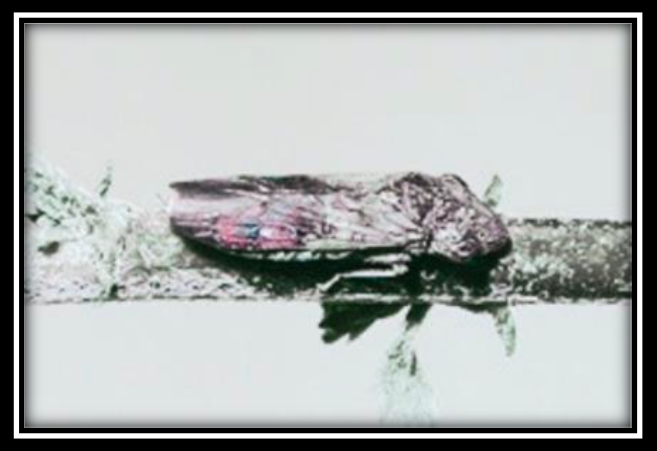
Although phylloxera and Pierce's disease are among the greatest threats in the history of viticulture, their nature is fundamentally different. Phylloxera is a tiny insect native to North America that mainly attacks the roots of the vine, where it causes lesions leading to their rot and, eventually, the death of the vine. It spreads naturally in the soil, from one root to another, but also through the movement of soil, contaminated agricultural equipment or through its winged forms. Pierce's disease, also native to North America, which destroyed a large part of the vineyards in California around 1882, is on the other hand caused by a bacterium, Xylella fastidiosa, which does not directly attack the roots but colonizes the xylem (the vessels) that carry water into the plant by obstructing this circulation, it causes the leaves and twigs to dry out quickly. Unlike phylloxera, this bacterium does not move on its own, it is transmitted from one vine to another by insect vectors, mainly leafhoppers (cicadelle), which feed on the sap. The gradual change in the climate due to its warming is causing a new infestation of the leafhopper in all American vines. Two different enemies, two distinct modes of action, but the same observation, because each, in its own time, is forcing viticulture to rethink its very near future in depth.
Verse 56.02.04: Denial
Blending and interlacing
Denial of reality is a psychological and intellectual mechanism that consists of refusing to acknowledge or accept a reality that has been demonstrated, because it is perceived as too disturbing, too threatening or incompatible with our beliefs, interests or identity. It is a profoundly human defense mechanism that allows, temporarily, to protect oneself from a truth that is difficult to accept. But when denial takes hold, it leads to the rejection of the facts despite the accumulation of irrefutable evidence and prevents the decisions necessary for adaptation. The contemporary world of wine is no exception to this reality, and this denial is expressed in many ways. Either by minimizing the consequences of global warming, or by believing that yesterday's wine-growing practices will be enough to meet the challenges of tomorrow, by concentrating our efforts on solutions that are sometimes more symbolic than structural, such as the multiplication of labels for grape varieties whose future is nevertheless compromised, or by delaying the adaptations that have become essential, in particular the development of new rootstocks and grape varieties that are naturally more resistant to emerging diseases. Denial will never change the facts; it only postpones the moment when we will be forced to face it. However, as the history of viticulture has already taught us, the longer we delay adaptation, the higher its human, economic, environmental and heritage costs will become.
As Arthur Schopenhauer wrote:
"All truth goes through three stages: first it is ridiculed, then it is violently fought, and finally it is accepted as self-evident."
Conclusion:
Denial of reality lies precisely between these three stages. It is this instinctive resistance to change that pushes us to defend the world as we would like it to remain, rather than the one it is becoming. Faced with the challenges that are already reshaping viticulture, it may be time to rediscover another meaning, the one that should guide each of our choices, it is the citizen's "Sense of Duty". Our responsibility is not only to preserve the wines we love today, but to pass on to future generations the means to continue to celebrate the beauty, diversity and greatness of wine. Because the most beautiful legacy we can leave to our children will perhaps not be that of our certainties, but that of our ability to adapt without ever betraying the soul of our vineyards in its "Sense of Place".
Powered by Lightspeed
Display prices in:USD
